CUERESTORA® | RESTORATIVE JUSTICE

Restorative Justice & Restorative Practices

Strengthen relationships, navigate conflict, and build more connected communities through practical restorative justice training, restorative circles, conversations, and tools designed for real-world use.

Live Online Training Self-Paced Learning Facilitation Tools Team & Organization Training
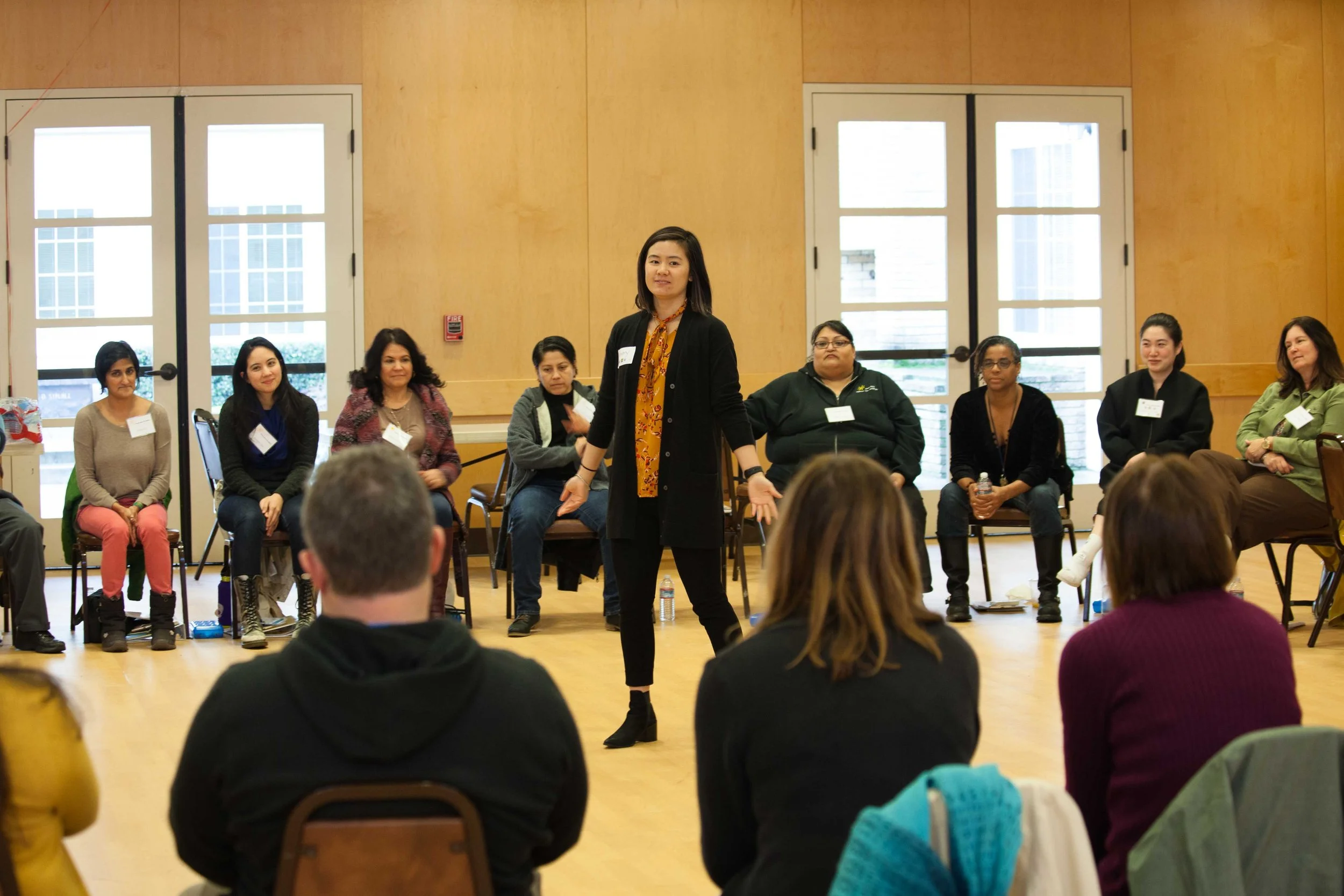
Adults participating in a restorative justice training circle
Learn the principles.
Practice the process.
Strengthen your community.
Restorative justice facilitator guiding a professional learning circle
UNDERSTANDING RESTORATIVE JUSTICE

Restorative justice begins with relationships.

Restorative justice is an approach to strengthening relationships, understanding harm, supporting accountability, and creating meaningful opportunities for people to address needs and move forward.

Restorative practices include more than responding when something goes wrong. They also involve intentionally building connection, trust, shared expectations, communication, and community before conflict occurs.

Build relationships proactively

Create connection through relationship circles, community agreements, values exploration, and structured conversations.

Respond thoughtfully to conflict

Understand impact, identify needs, prepare participants, and use appropriate restorative processes to address conflict and harm.

Turn principles into everyday practice

Develop communication, assessment, planning, and facilitation skills that support intentional restorative work.

LEARN WITH CUERESTORA®

Restorative justice training that prepares you to practice.

Explore live online and in-person restorative justice training designed to build practical knowledge, thoughtful decision-making, and the skills needed to guide restorative processes with intention.

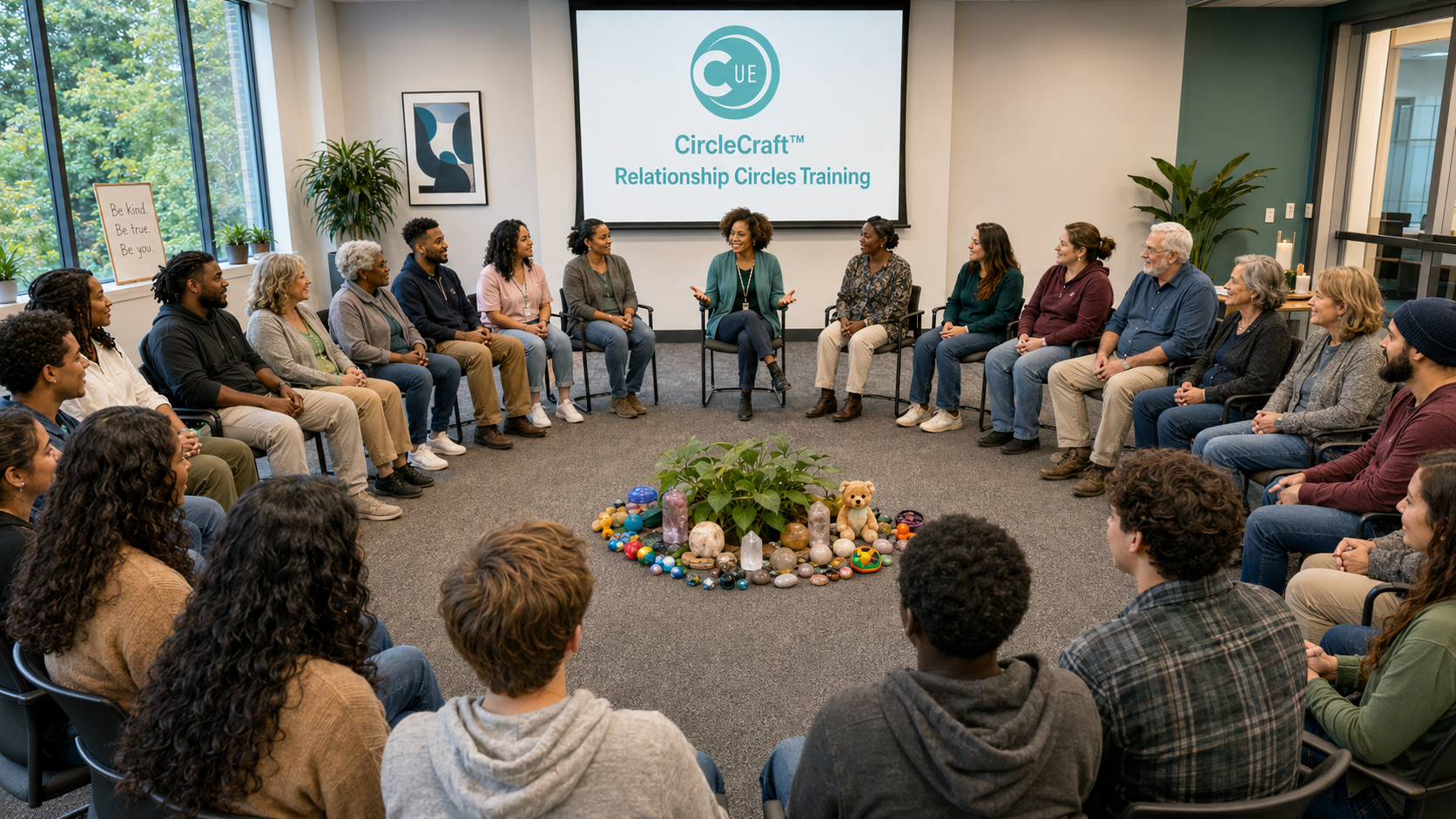
CircleCraft Relationship Circles restorative justice training
PROACTIVE RESTORATIVE PRACTICE

CircleCraft™ Relationship Circles Training

Learn how to design and guide restorative circles that strengthen relationships, encourage participation, establish shared agreements, and build community.

  • Community Agreement Circles
  • Values Exploration Circles
  • Team Building Circles
  • Discussion Circles
  • Intentional circle planning and design
Explore Relationship Circles Training →
CircleCraft Conflict Circles restorative justice training
RESPONSIVE RESTORATIVE PRACTICE

CircleCraft™ Conflict Circles Training

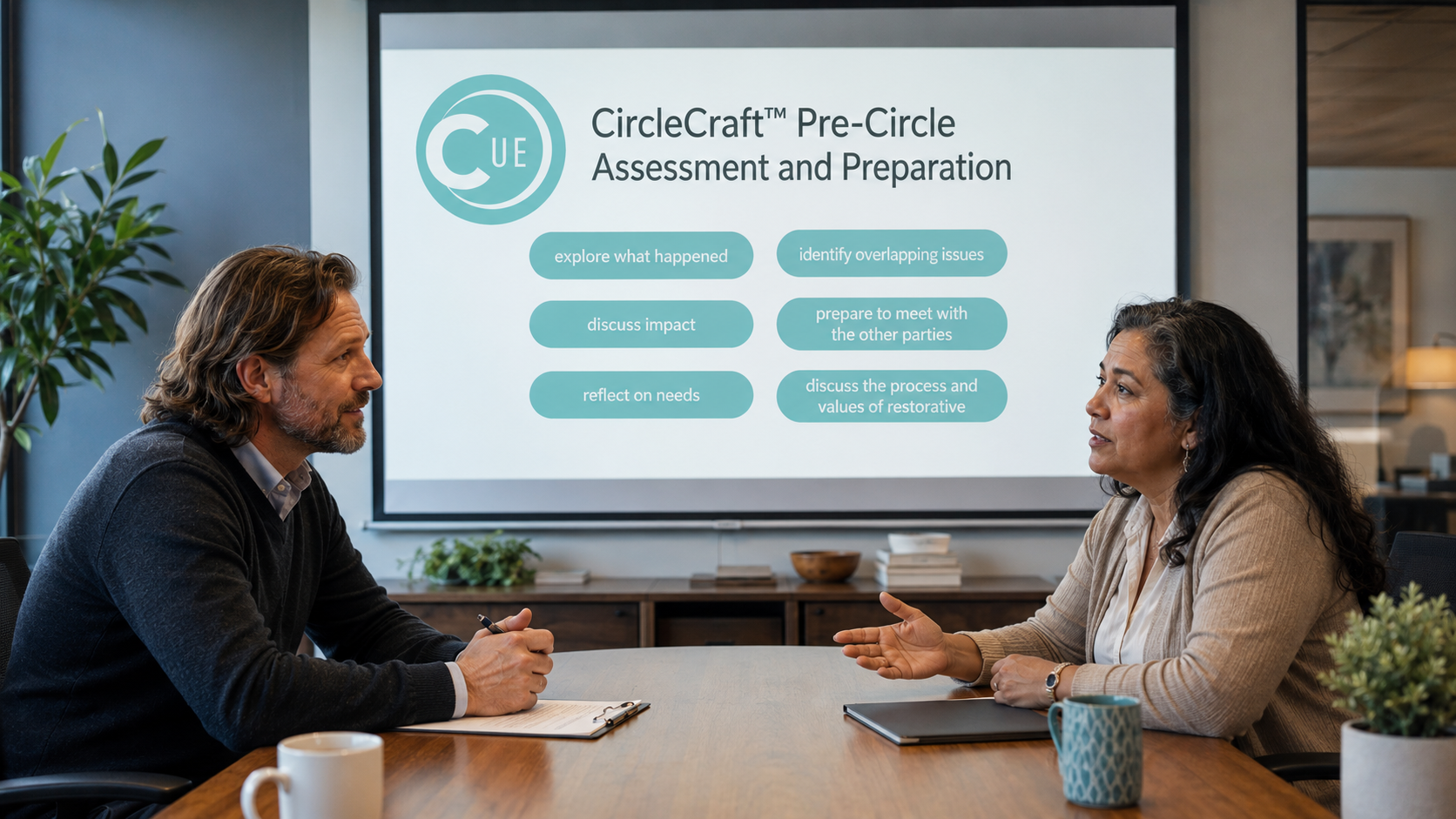
Learn how to assess conflict, prepare participants, consider readiness, and structure restorative processes that support understanding, accountability, and appropriate next steps.

  • Conflict assessment and preparation
  • Participant readiness and needs
  • Restorative inquiry and communication
  • Conflict-circle planning
  • Facilitation, impact, and accountability
Explore Conflict Circles Training →

Professional learning with certificate options

CueRestora® restorative justice training offers course-specific certificate options. Depending on the course, participants may document participation, complete knowledge assessments, or pursue more advanced practitioner-level requirements. Review the individual training description for the requirements and credential available.

Compare training and certificate options →
THE CIRCLECRAFT™ APPROACH

Great circles start with intentional design.

A restorative circle should be designed for the people in the room, not simply selected from a list of preplanned activities.

CircleCraft™ helps facilitators think through the purpose, participants, time, accessibility, group dynamics, and structure of each restorative circle.

Our design guides, training, and companion resources support the process of creating meaningful, cohesive circles that connect each activity and question to a clear intention.

CircleCraft Relationship Circles Design Guide product
CircleCraft free relationship circles design guide companion self-paced course
FREE RESTORATIVE JUSTICE LEARNING FREE SELF-PACED COURSE

Start learning restorative justice for free.

New to restorative justice? Or ready to refine the circles you're already facilitating?

The CircleCraft™ Relationship Circles Design Guide Free Companion Course introduces restorative justice foundations and shows how to approach circle planning with greater clarity and intention.

  • Restorative justice basics
  • Four relationship-circle frameworks
  • CircleCraft™ design process overview
  • Circle planning examples
  • Free printable and digital planning sheets
RESTORATIVE JUSTICE TOOLS & RESOURCES

Practical tools for meaningful restorative work.

Equip yourself and your team with practical resources for circle planning, relationship building, restorative conversations, emotional processing, and conflict resolution.

CircleCraft Relationship Circles Design Guide
DESIGN GUIDE

CircleCraft™ Relationship Circles Design Guide

A comprehensive framework for creating purposeful community-building and relationship circles.

Explore Design Guide →
Restorative conflict circle assessment and preparation
CONFLICT CIRCLE GUIDE

CircleCraft™ Conflict Circles Design Guide

Support restorative conflict-circle preparation, intentional process design, and responsive restorative practice.

Explore Conflict Guide →
Relationship Building CUE Cards conversation card deck
CONVERSATION CARDS

Relationship Building CUE Cards™

Conversation prompts for connection, reflection, team building, community circles, and meaningful discussion.

Explore CUE Cards →
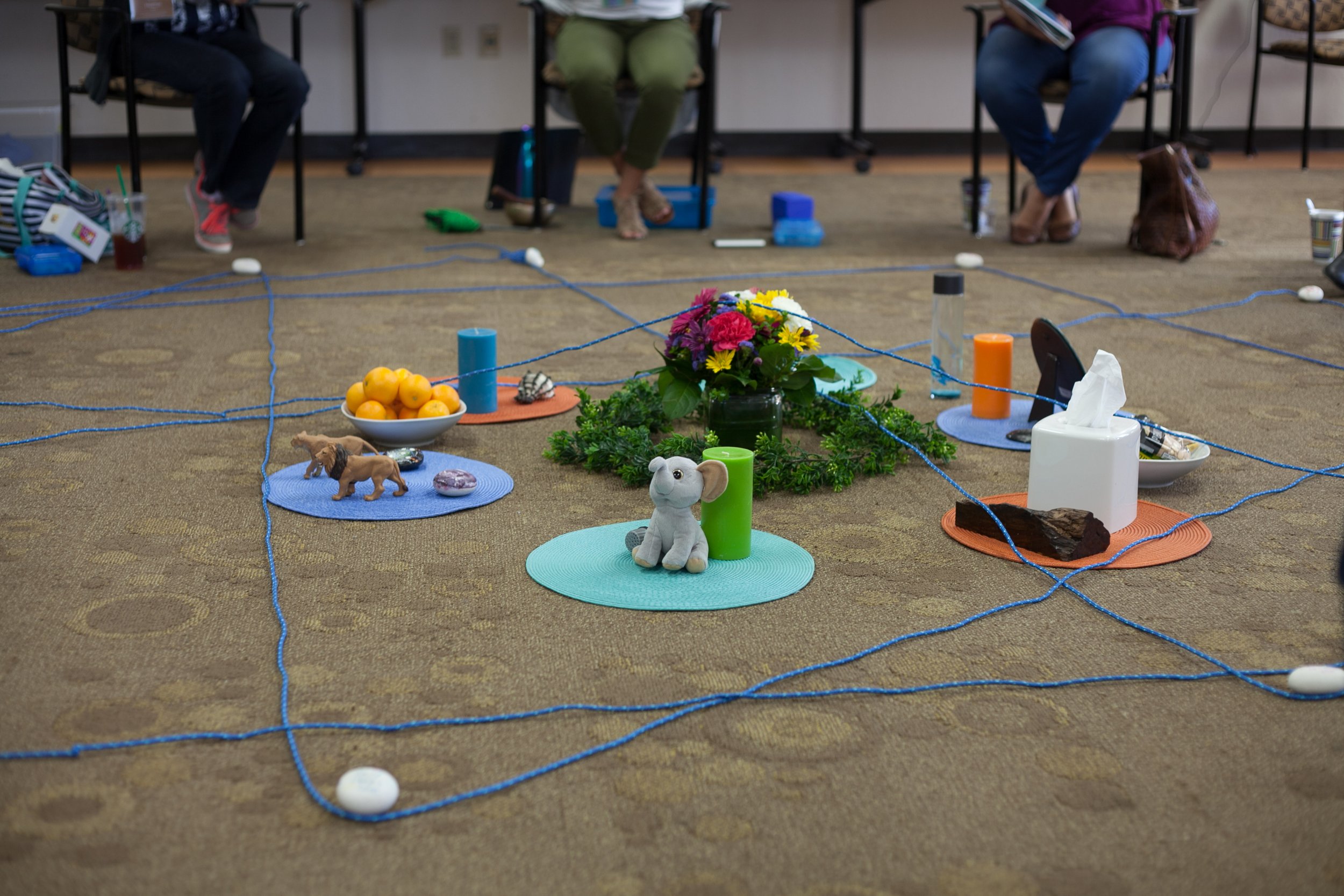
Restorative circle centerpiece and facilitation setting
FACILITATION KIT

CircleCraft™ Relationship Circles Facilitation Kit

Bring together practical materials to support intentional circle design and facilitation in your setting.

Explore Facilitation Kit →

Explore the complete restorative justice toolkit.

Discover circle design guides, facilitation kits, communication tools, emotional processing resources, and learning materials.

Shop All RJ Tools →
RESTORATIVE PRACTICES IN ACTION

Restorative justice for the communities we serve.

Restorative practices can strengthen relationships and support thoughtful responses to conflict across educational, professional, organizational, and community settings.

Schools & School Districts

Classroom and community circles, restorative conversations, student engagement, staff development, school climate, and conflict response.

Workplaces & Organizations

Team building, community agreements, workplace conflict, restorative communication, relationship circles, and organizational collaboration.

Universities & Public Agencies

Professional learning, relationship-centered communication, restorative process design, staff engagement, and conflict navigation.

Nonprofits & Community Organizations

Community-building circles, dialogue, restorative facilitation, organizational relationships, accountability, and repair.

Restorative justice circle centerpiece
INSIGHTS FROM THE FIELD

Restorative justice is an evolving practice.

Learning from the restorative justice community is an important part of continuing to strengthen how we understand, design, and implement restorative processes.

Explore reflections from the National Association of Community and Restorative Justice (NACRJ) conference and consider how ideas from the field can inform everyday restorative work.

EXPLORE CUERESTORA® TRAINING

Experience our training. Plan your next steps.

Considering restorative justice training for your school, district, workplace, or organization? Join a free live training preview to experience our approach, or schedule a conversation with our team to explore training options for your group.

Participants experiencing live restorative justice training together Free Live Online Preview
FREE • 90 MINUTES • ONLINE

Sample Our Restorative Justice Trainings

Curious about what our restorative justice training is actually like? Our free live preview lets you experience selected activities, concepts, and approaches from CueRestora® trainings before deciding what might work for your organization.

  • 60-minute interactive training sampler
  • 30-minute live Q&A with our team
  • Explore our training approach and practical applications
  • Ask about course options, group training, and implementation
  • Designed with organizational decision-makers in mind
Reserve Your Free Preview Seat →

View available dates and reserve your place through our secure Calendly registration page.

FREE • ONE-ON-ONE

Talk With Our Restorative Justice Team

Already considering restorative justice training for your organization? Schedule a complimentary 30-minute assessment with our team to discuss your goals, training needs, and the best options for your participants.

  • Identify appropriate restorative justice training topics
  • Discuss live online or in-person delivery
  • Explore training for groups and teams
  • Ask about professional certificates and learning pathways
  • Discuss organizational implementation and next steps
Schedule Your Free Consultation ↓

Choose an available meeting time directly on this page using the calendar below.

SCHEDULE A MEETING

Let's talk about restorative justice training for your organization.

Every organization has different goals, challenges, participants, and training needs. Our initial conversation gives us an opportunity to understand what you're working toward.

Whether you're exploring restorative justice for the first time or expanding an existing program, we can help you identify a practical starting point.

  • 30-minute meeting with our team
  • Discuss your audience, objectives, and training format
  • Explore recommended courses, certificates, or learning sequences
  • Consider next steps for your organization
Complimentary training assessment

This introductory conversation is an opportunity to explore whether CueRestora® training is a good fit. No purchase is required to schedule.

Select a date and time

Calendar not displaying? Open the meeting scheduler directly →

RESTORATIVE CONVERSATIONS

Not every restorative conversation requires a circle.

Restorative conversations create opportunities for people to feel heard, reflect on their experiences, explore impact, identify needs, and move toward thoughtful next steps.

OpenStep™ and BaseStep™ offer practical communication approaches that help people listen with intention, ask meaningful questions, and navigate difficult experiences without rushing to give advice or solve the problem for someone else.

  • Reflective listening and paraphrasing
  • Understanding emotions and impact
  • Restorative questions and inquiry
  • Identifying needs and appropriate next steps
  • Building more thoughtful communication habits
OpenStep restorative conversations communication training
RESTORATIVE JUSTICE QUESTIONS & ANSWERS

Frequently asked questions about restorative justice.

Learn more about restorative practices, training formats, restorative circles, and professional learning opportunities.

What is restorative justice?

Restorative justice is an approach that centers relationships, harm, accountability, needs, and opportunities for repair. It encourages people to understand what happened, who was affected, what is needed, and what meaningful steps may help address the situation.

What is the difference between restorative justice and restorative practices?

Restorative justice is frequently associated with responding to harm and supporting accountability and repair. Restorative practices is a broader term that also includes proactive approaches, such as relationship circles, community agreements, and intentional dialogue, that strengthen connection before conflict occurs.

What are restorative justice circles?

Restorative circles are structured processes that create opportunities for participants to communicate, reflect, listen, and engage around a shared purpose. Some circles focus on relationship building, while others address conflict, impact, accountability, and repair. Appropriate design and preparation depend on the purpose, participants, and circumstances.

What are relationship-building circles?

Relationship circles are proactive restorative practices designed to strengthen trust, communication, participation, and connection. CueRestora® CircleCraft™ training includes Community Agreement Circles, Values Exploration Circles, Team Building Circles, and Discussion Circles.

How are conflict circles different from relationship circles?

Relationship circles focus on strengthening connections and community before conflict occurs. Conflict circles respond to particular situations involving conflict or harm. They generally require more individualized assessment, participant preparation, readiness considerations, and thoughtful facilitation to support an appropriate restorative process.

Does CueRestora® offer restorative justice training online?

CueRestora® offers restorative justice learning through live-online training and self-paced courses. Training opportunities include restorative conversations, relationship circles, conflict circles, and related restorative practices. Visit the Restorative Justice Trainings page for current offerings and registration information.

Can I earn a certificate through restorative justice training?

Certificate options depend on the specific training. Some courses offer documentation of participation or completion, while more advanced assessment pathways may require testing, applied assignments, practice, and additional demonstrated competencies. The requirements are described on the relevant course or training page.

Does CueRestora® provide restorative justice training for organizations?

CueRestora® supports restorative justice professional learning for schools, workplaces, universities, public agencies, nonprofits, and community organizations. Training topics and delivery formats can be discussed based on the organization's goals, audience, and desired applications.

Can I preview CueRestora® restorative justice training before bringing it to my organization?

Yes. CueRestora® offers a free 90-minute live online restorative justice training preview for individuals and organizational decision-makers interested in exploring our training approach.

The experience includes approximately 60 minutes of selected training content and activities, followed by a 30-minute live question-and-answer session. Participants can learn more about our training options, professional learning experiences, and organizational implementation opportunities.

Explore the free restorative justice training preview →

How do I schedule a restorative justice training consultation?

You can schedule a complimentary 30-minute training assessment directly on this page. During the meeting, our team can discuss your organization's goals, training audience, preferred format, and possible next steps.

Schedule your free consultation →

Do I need prior experience to learn restorative justice?

Not necessarily. Introductory learning opportunities are designed to help people understand restorative justice foundations and basic restorative practices. More advanced training may require additional preparation, prerequisite learning, or demonstrated skills. Review each training's requirements before registering.

Where can I find restorative justice tools and circle planning resources?

CueRestora® offers CircleCraft™ design guides, circle planning materials, facilitation kits, restorative conversation resources, relationship-building cards, and other tools designed to support restorative work. Explore the Restorative Justice Tools collection to see available products.
YOUR NEXT STEP STARTS HERE

Ready to bring restorative practices into your work?

Start with an upcoming restorative justice training, explore our practical facilitation tools, experience a free live training preview, or schedule a conversation with our team about bringing restorative learning to your organization.

Questions? Email connect@circleuped.com or call (510) 470-5290 .