Join an upcoming training.
Browse public live online and in-person training options, choose an available date, and register for yourself or additional participants.
See Upcoming Trainings →Learn restorative justice through practical, engaging professional training designed for real-world application. Register for an upcoming live training, build your skills through self-paced courses, or bring customized restorative justice training to your organization.
Live Online · In Person · Self-Paced · Professional Certificates

Whether you're enrolling yourself, developing a team, or exploring restorative justice for your organization, choose the option that fits your goals.
Browse public live online and in-person training options, choose an available date, and register for yourself or additional participants.
See Upcoming Trainings →Explore the full curriculum, build a recommended training sequence, or schedule a complimentary assessment to discuss your organization's needs.
Schedule a Training Assessment →Discover self-paced restorative justice courses, including a free introductory CircleCraft™ companion course, along with professional learning and certificate options.
Explore Self-Paced Learning →Explore live, instructor-led restorative justice trainings from CircleUp®. See real upcoming sessions, compare course formats, and register securely through our Calendly schedule.
Build a practical foundation for restorative relationship circles. Learn core circle structure and facilitation while exploring community agreements, shared values,…
Deepen your relationship-circle practice through additional design and facilitation strategies. Learn to create engaging circles for relationship building, inclusio…
Learn the complete CircleCraft™ approach to designing and facilitating preventative, relationship-building circles. Practice community agreements, values exploratio…
Learn a practical restorative conversation process for challenging one-on-one situations. Practice listening, paraphrasing, exploring impact and emotions, asking re…
Learn how to prepare thoughtfully for restorative conflict circles. Practice assessing conflict, identifying readiness, needs and risks, meeting with participants i…
Learn the restorative conflict-circle process from assessment and preparation through circle design and facilitation. Practice supporting reflection, understanding …
Build on pre-circle assessment and preparation by learning how to design and facilitate the restorative conflict circle itself. Practice guiding dialogue around wha…
No courses match these filters. Try All Courses or All Programs.
Last updated from Calendly: October 14, 2026. Registration and seat availability are confirmed on Calendly.
We also provide private, customized live-online and in-person restorative justice training for schools, districts, workplaces and organizations.
Explore our full range of restorative justice trainings. Each training develops specific knowledge or skills, allowing individuals to focus on their learning needs and organizations to create a thoughtful professional development plan.
Trainings can be explored individually or combined into a sequence based on your goals, participants, and intended applications.
Learn to design and guide circles that strengthen relationships, encourage meaningful discussion, establish shared expectations, explore values, and build community before conflict occurs.
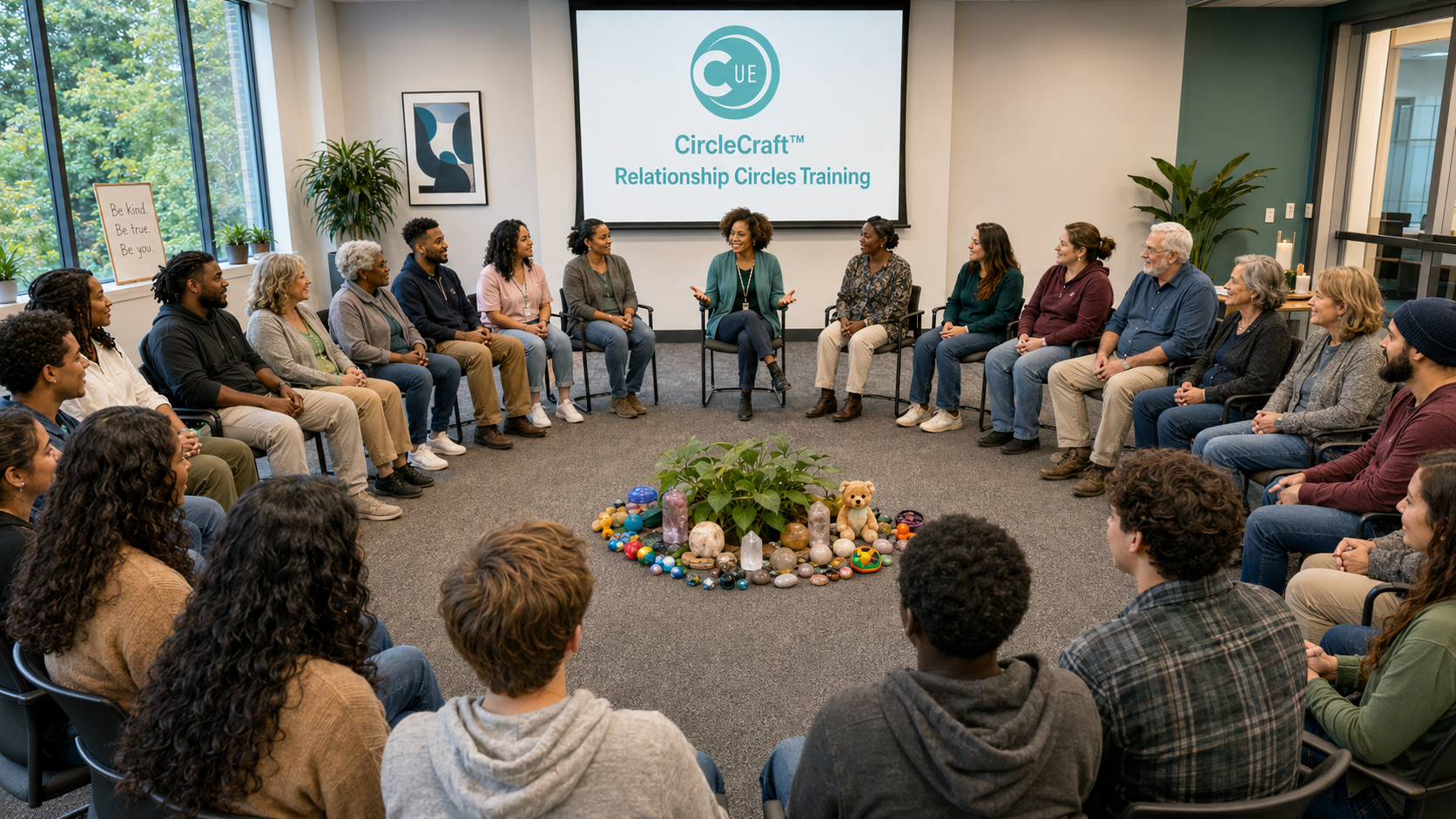
Develop competency in Community Agreement, Values Exploration, Team Building, and Discussion Circles, with a focus on intentional circle design.
View Training Details →
Design structured discussion circles that create space for voice, reflection, participation, and purposeful dialogue.
View Training Details →Responsive restorative justice requires more than facilitating a conversation. Learn how to assess conflict, determine readiness, prepare participants, design an appropriate process, and guide restorative responses to conflict and harm.
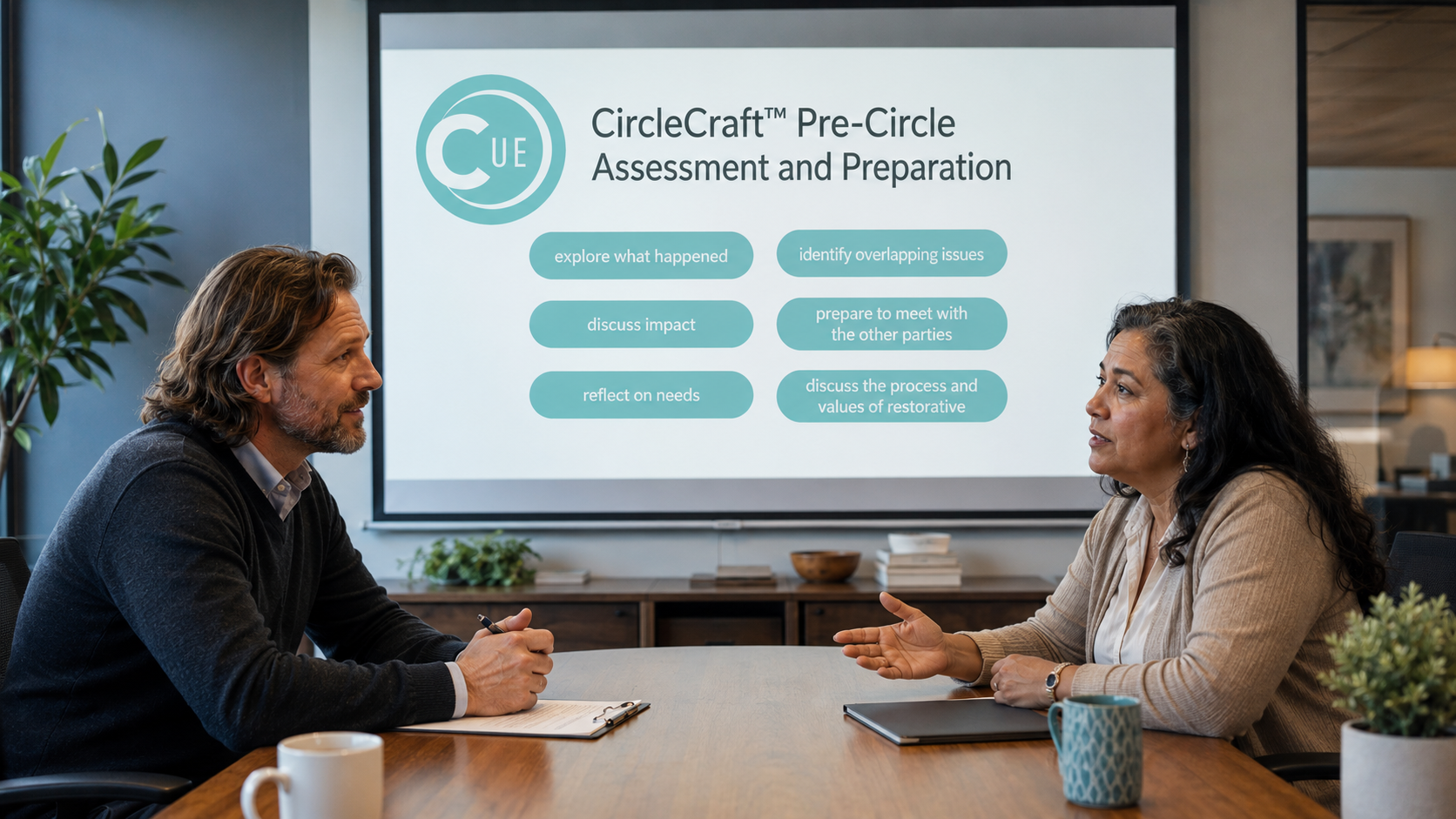
Assess conflict, identify needs, consider readiness and risks, and prepare individuals before a restorative process begins.
View Training Details →
Design and guide restorative conflict circles that help people explore impact, accountability, needs, understanding, and appropriate next steps.
View Training Details →
Advance your approach to larger groups, complex conflict, and restorative situations requiring additional preparation and design.
View Training Details →Understand what restorative justice is, how restorative systems differ from punitive responses, the historical roots and values of the work, and what thoughtful implementation requires.
An introduction to restorative justice concepts, approaches, values, systems, and foundational practice.
View Training Details →
Examine restorative and punitive approaches and the systems that influence accountability, discipline, decision-making, and community.
View Training Details →
Explore the values and principles used to assess whether a practice or organizational response is meaningfully restorative.
View Training Details →
Explore historical context, Indigenous roots, and the development of contemporary restorative justice approaches.
View Training Details →
Examine planning, organizational readiness, capacity, culture, stakeholder engagement, and sustainable implementation.
View Training Details →Restorative practice extends beyond formal circles. Develop restorative conversation skills, relationship-building habits, needs-based communication, and greater awareness of identity, bias, and equity.
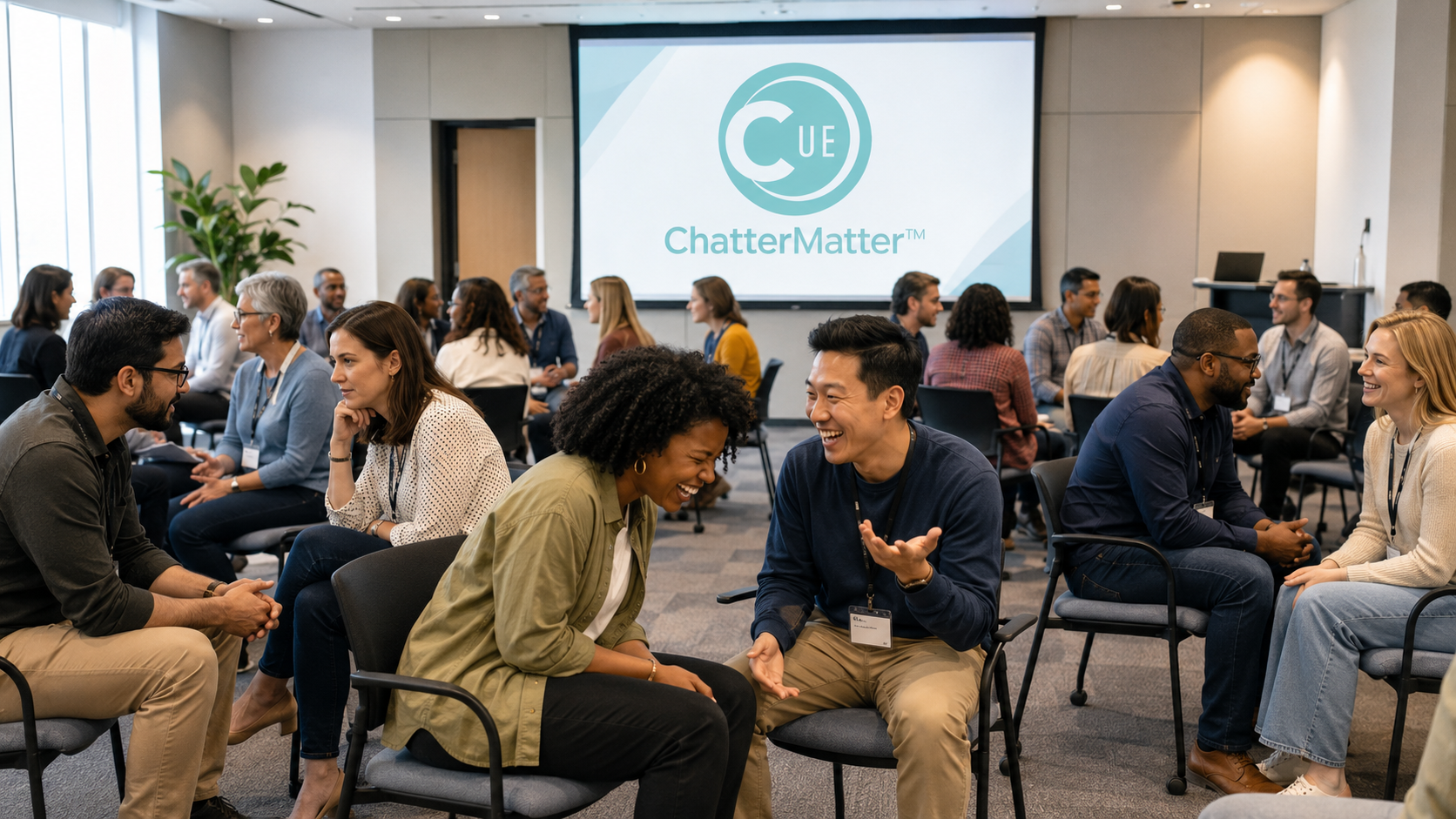
Strengthen everyday relationships through meaningful communication habits and connection practices.
View Training Details →
Learn to listen, reflect, understand impact, and guide conversations that support emotional processing and thoughtful next steps.
View Training Details →
Deepen restorative communication competency through extended learning, scenarios, structured practice, and assessment.
View Training Details →
Support people in identifying their needs and determining appropriate next steps without imposing advice or solutions.
View Training Details →
Examine how bias influences perceptions, decisions, relationships, and restorative practice across diverse groups.
View Training Details →Learn how to use practical restorative circle planning tools to design intentional, adaptable circle experiences for the groups you serve.

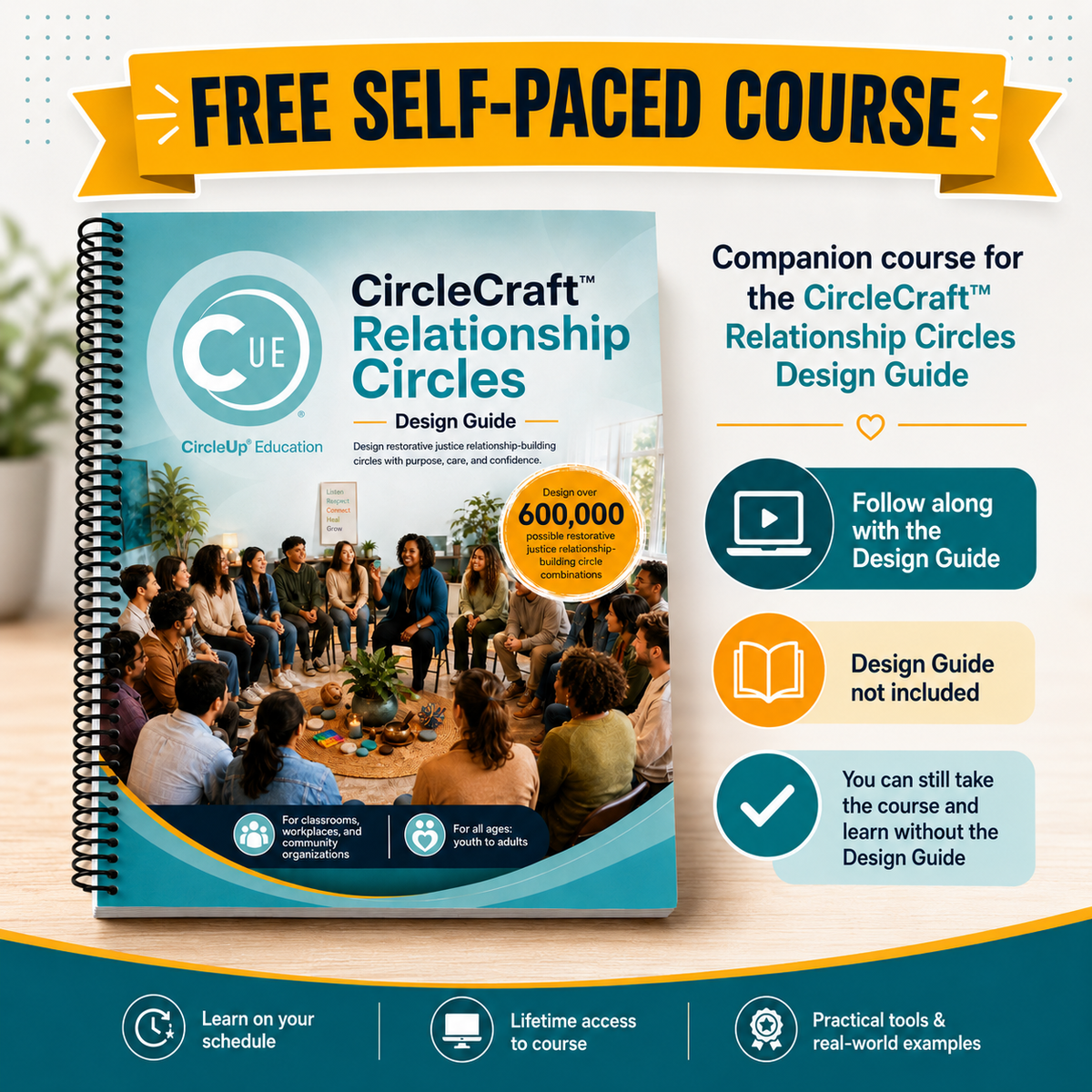
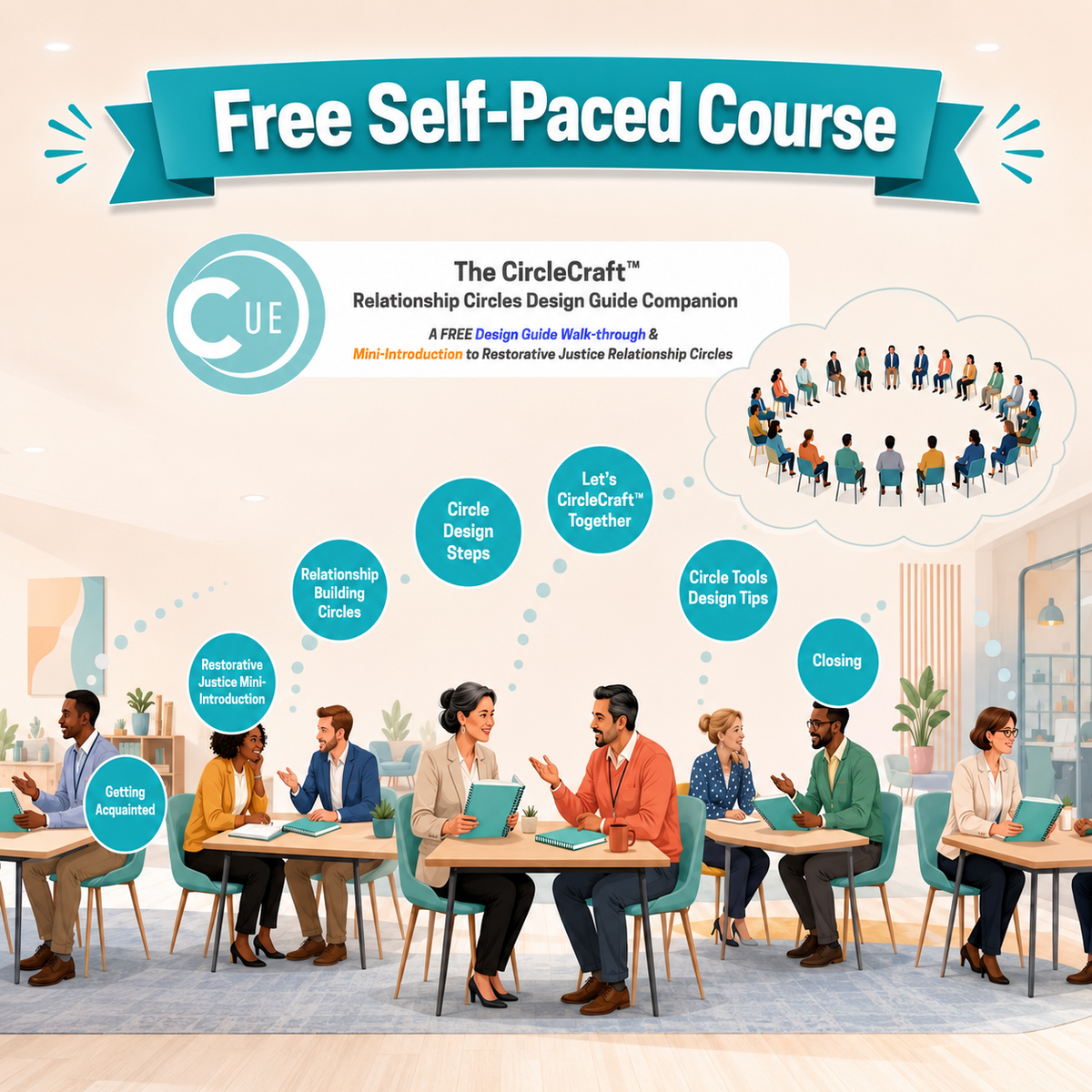
A free self-paced introduction to restorative justice and CircleCraft™, including four relationship-circle examples, planning guidance, and downloadable planning sheets.
Explore Free Course →We can help you identify the topics, sequence, duration, delivery format, and learning outcomes that fit your team's responsibilities and goals.
Move beyond an introduction to restorative justice and develop the knowledge, design skills, judgment, and practical competencies required for specific restorative practices.
Our Practitioner Certification pathways include defined learning requirements, knowledge assessments, practice, and applied assignments reviewed against the expectations of the certification.
Choose a specialization based on the type of restorative work you want to do, or explore the Advanced Practicum for broader study and evaluated real-world application.
Develop competency in designing, adapting, and preparing restorative relationship circles for different groups, purposes, and circumstances.
Build the skills to assess conflict, prepare participants, and design appropriate restorative responses involving impact, accountability, needs, and next steps.
Develop restorative communication competencies that help people process difficult experiences, feel heard, identify needs, and move toward thoughtful next steps.
Our most comprehensive pathway combines multiple restorative practices, advanced design, assessment, and evaluated application with real participants.
Not all certificates represent the same level of learning, assessment, or practical demonstration. The credential associated with each training tells you what was required to earn it.
Documents attendance and participation in a designated training experience, when this certificate option is offered.
Documents successful completion of the course-specific learning requirements, which may include knowledge checks, assignments, or assessments.
Requires completion of a designated professional pathway, with required assessment, practice, and reviewed application or design work.
Requires advanced learning and documented real-world practice, including designated evaluation and feedback processes.
Individuals may register for a training without completing an entire Practitioner Certification pathway. Formal certification requires satisfying the additional requirements established for that pathway. An optional knowledge assessment alone does not necessarily constitute Practitioner Certification.
Practitioner Certification documents the assessed competencies defined by the program. It is not government licensure and does not grant permission to teach, reproduce, or license CueRestora® proprietary training content.
Circle Up Education is an IACET Accredited Provider. Selected qualifying training events may award IACET Continuing Education Units in addition to their associated course certificate or credential.
CEU eligibility, the exact number of units, and completion requirements must be verified on the individual training listing. Not every course automatically qualifies for IACET CEUs.
Learn About IACET CEUs →Our self-paced courses make professional learning accessible whether you're beginning your restorative justice journey, strengthening your communication skills, or supplementing live training.
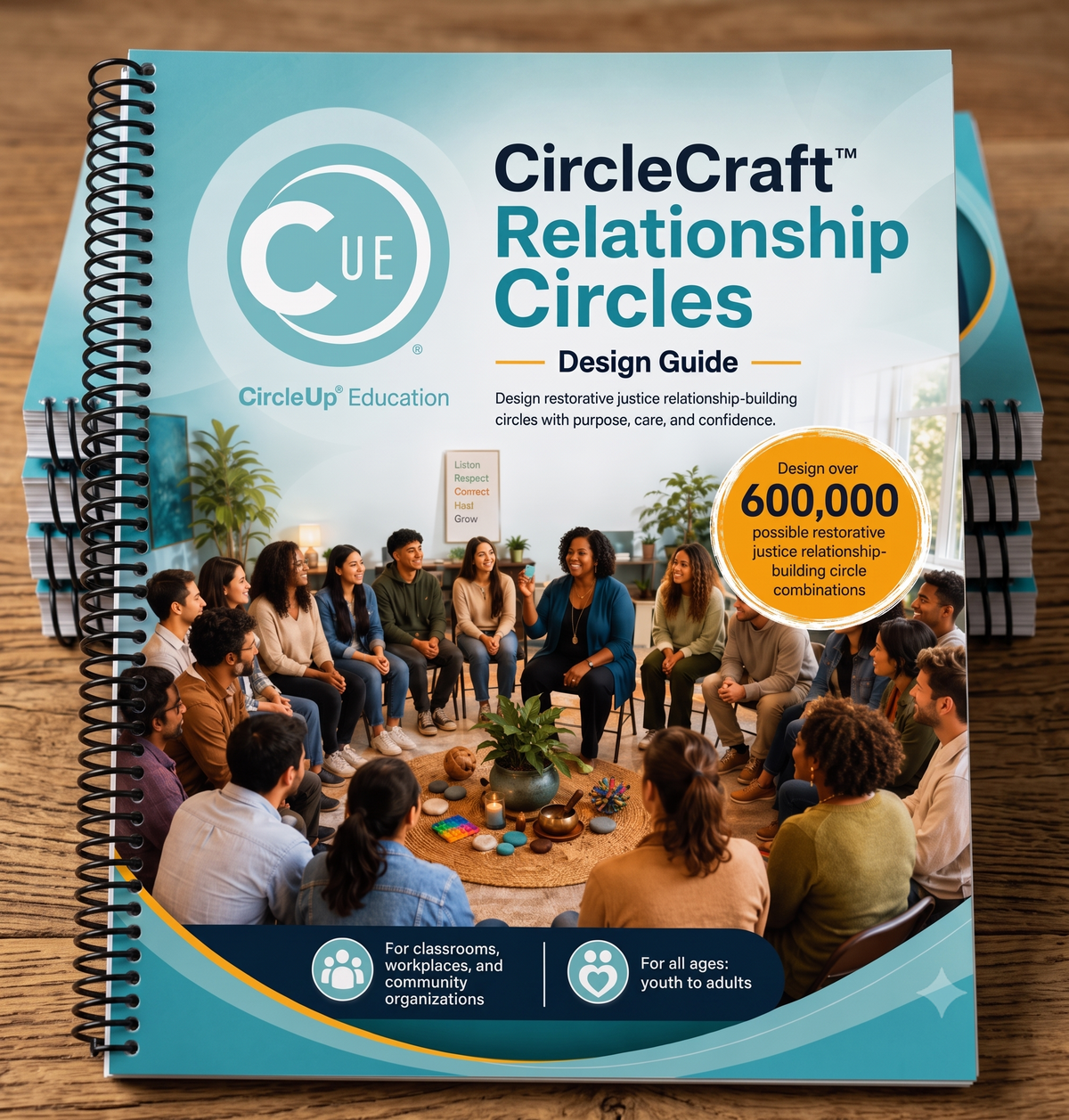
Explore courses such as OpenStep™ Restorative Conversations and our free CircleCraft™ Relationship Circles Design Guide Companion Course.
Selected courses include videos, interactive content, reflection, knowledge checks, assessments, and professional certificates based on their completion requirements.
CircleCraft™ Relationship Circles Design Guide - Free Companion Self-Paced Course
Restorative justice requires more than learning terminology or memorizing a list of questions.
Our professional learning is designed to help participants understand why a restorative process works, recognize when it should be used, and make thoughtful decisions about preparation, design, communication, and facilitation.
Depending on the training and credential, participants experience demonstrations, interactive learning, real-world examples, skill practice, reflection, knowledge checks, testing, and applied work.
Activities, discussion, scenarios, and guided reflection.
Frameworks and resources designed for real-world use.
Opportunities to confirm and assess understanding.
Additional assessments and submissions where required.
Your learning should reflect your responsibilities, experience, and the restorative practices you want to use. These recommended pathways offer starting points rather than rigid requirements.
Begin with restorative justice foundations and a practical introduction to circle design. This pathway is suitable for educators, community members, facilitators, and professionals learning restorative practices for the first time.
Develop the design and facilitation knowledge to guide relationship circles, then expand into responsive conflict processes if your role requires those skills.
Build the knowledge to guide implementation, support staff, develop training plans, and consider how restorative practices fit organizational systems, culture, and readiness.
Strengthen responsive restorative practice through assessment, participant preparation, facilitated conflict processes, restorative communication, and advanced circle design.
These are recommended learning sequences. Practitioner Certification pathways have their own defined requirements, prerequisites where applicable, assessments, and required submissions.
View Certification Requirements →Identity, culture, disability, gender, access, bias, and power can influence how people experience restorative processes. We recommend complementary professional learning that helps practitioners recognize these factors and respond thoughtfully.
Participate in a scheduled public training, bring an instructor to your organization, learn on your own schedule, or explore supported organization-wide eLearning options.
Instructor-led training held live online, with discussion, demonstrations, activities, and practice where applicable.
View Live Training →Experiential professional learning at a designated training location or through private organizational delivery.
Ask About In-Person Training →Flexible courses that may include interactive videos, knowledge checks, practical activities, and certificates.
Explore Self-Paced Courses →Explore group seats, private learning, institutional licensing, and supported SCORM or LMS options for selected courses.
Discuss Team Learning →Great training gives you knowledge and skills. Practical tools help you use them in your everyday work.
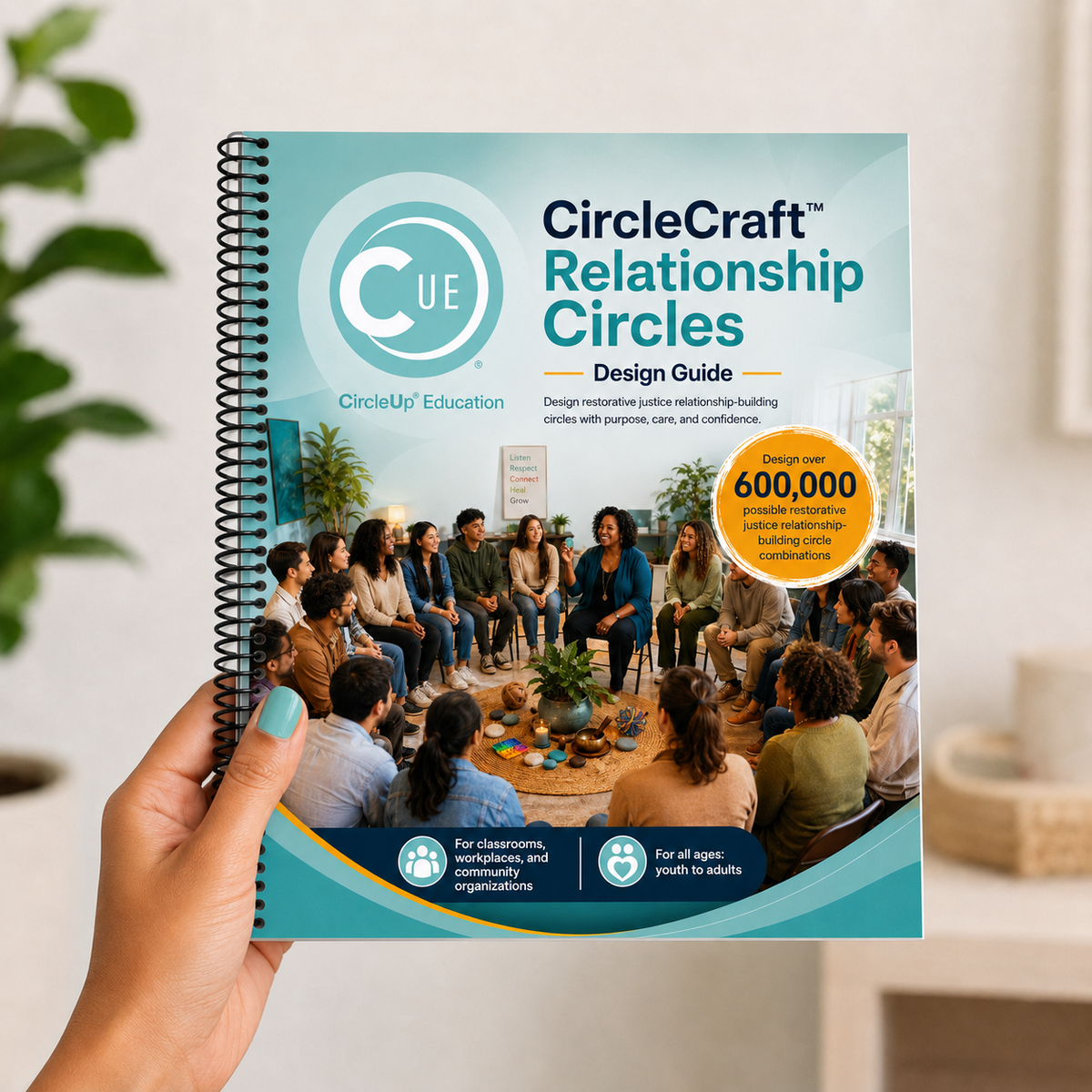
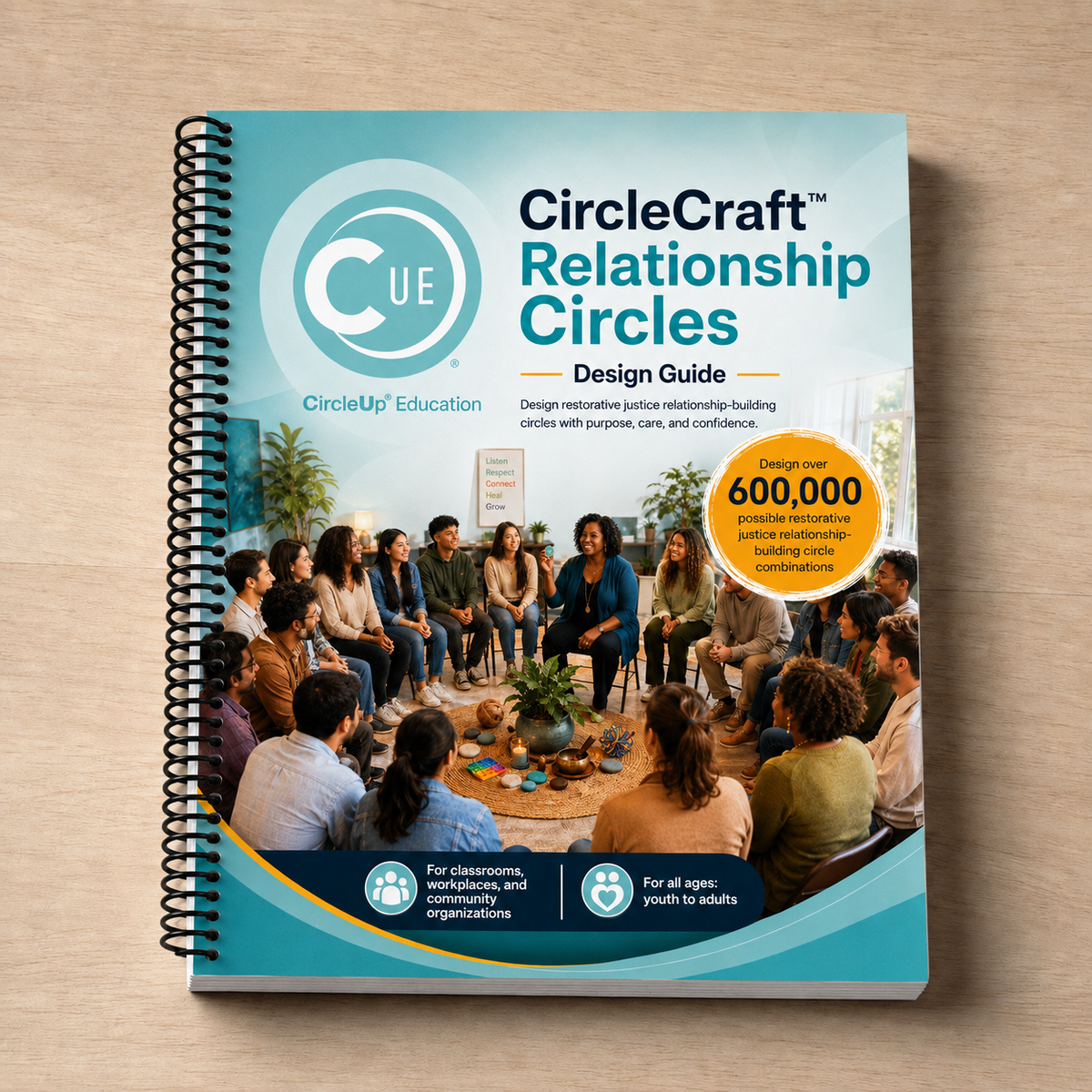
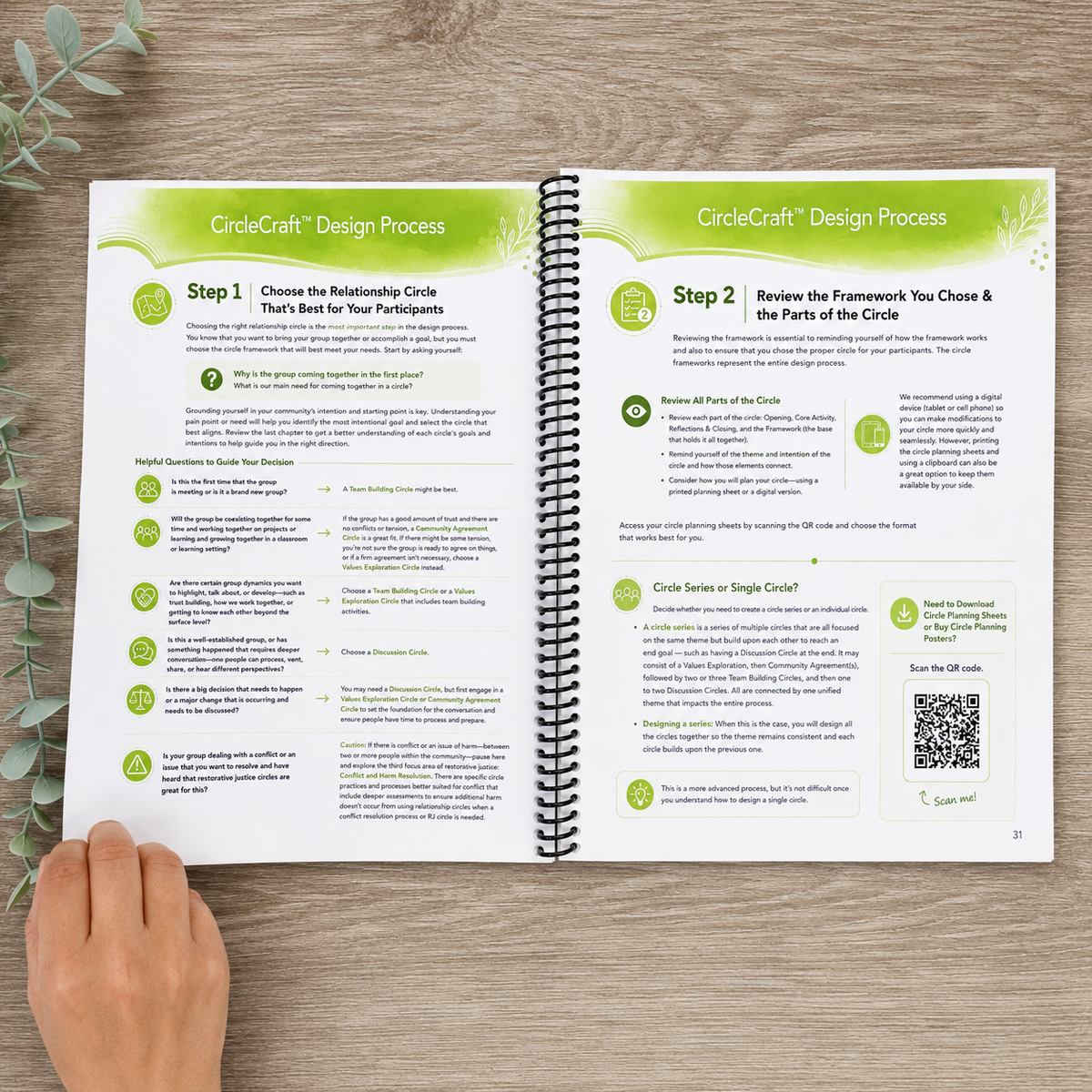
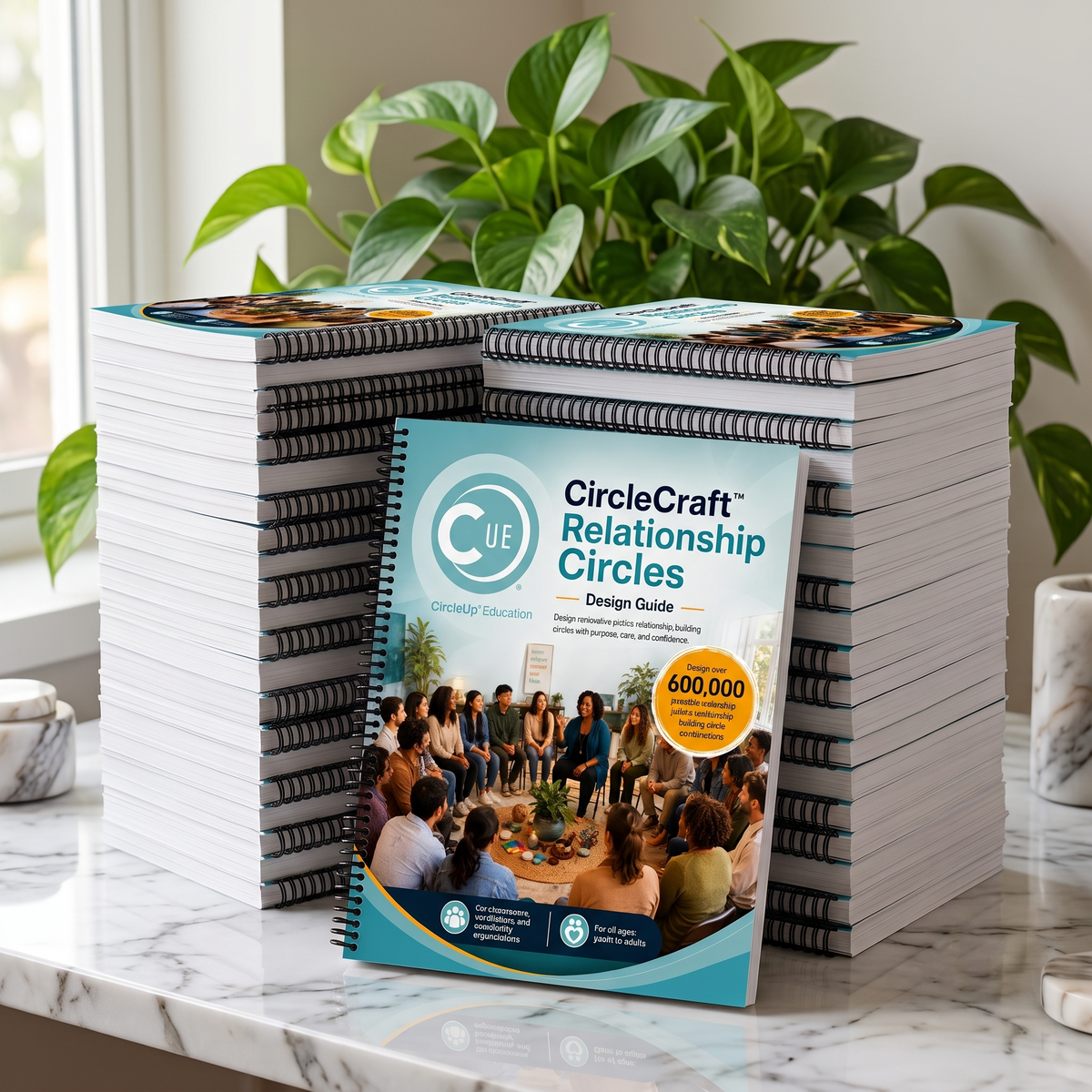
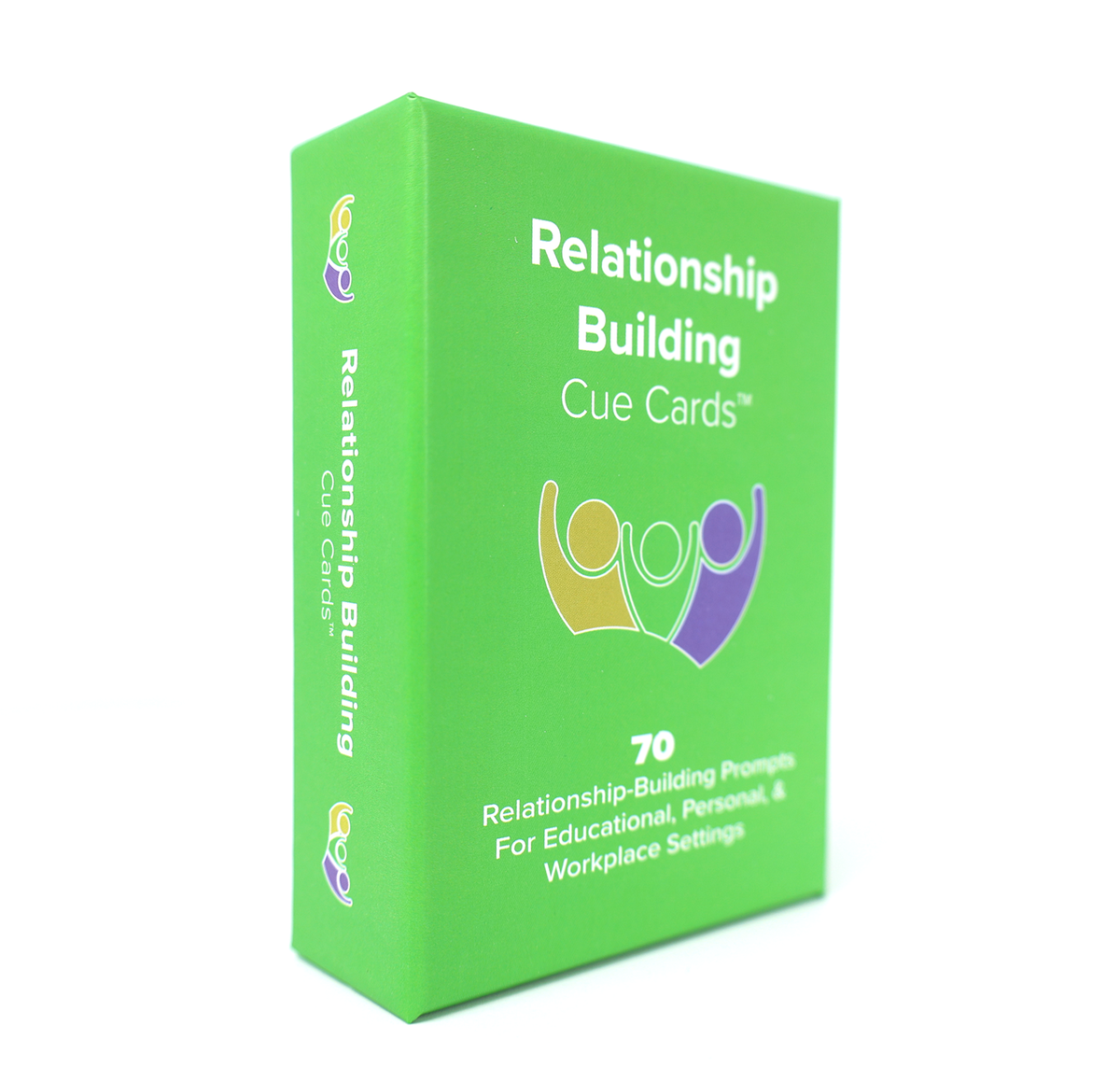
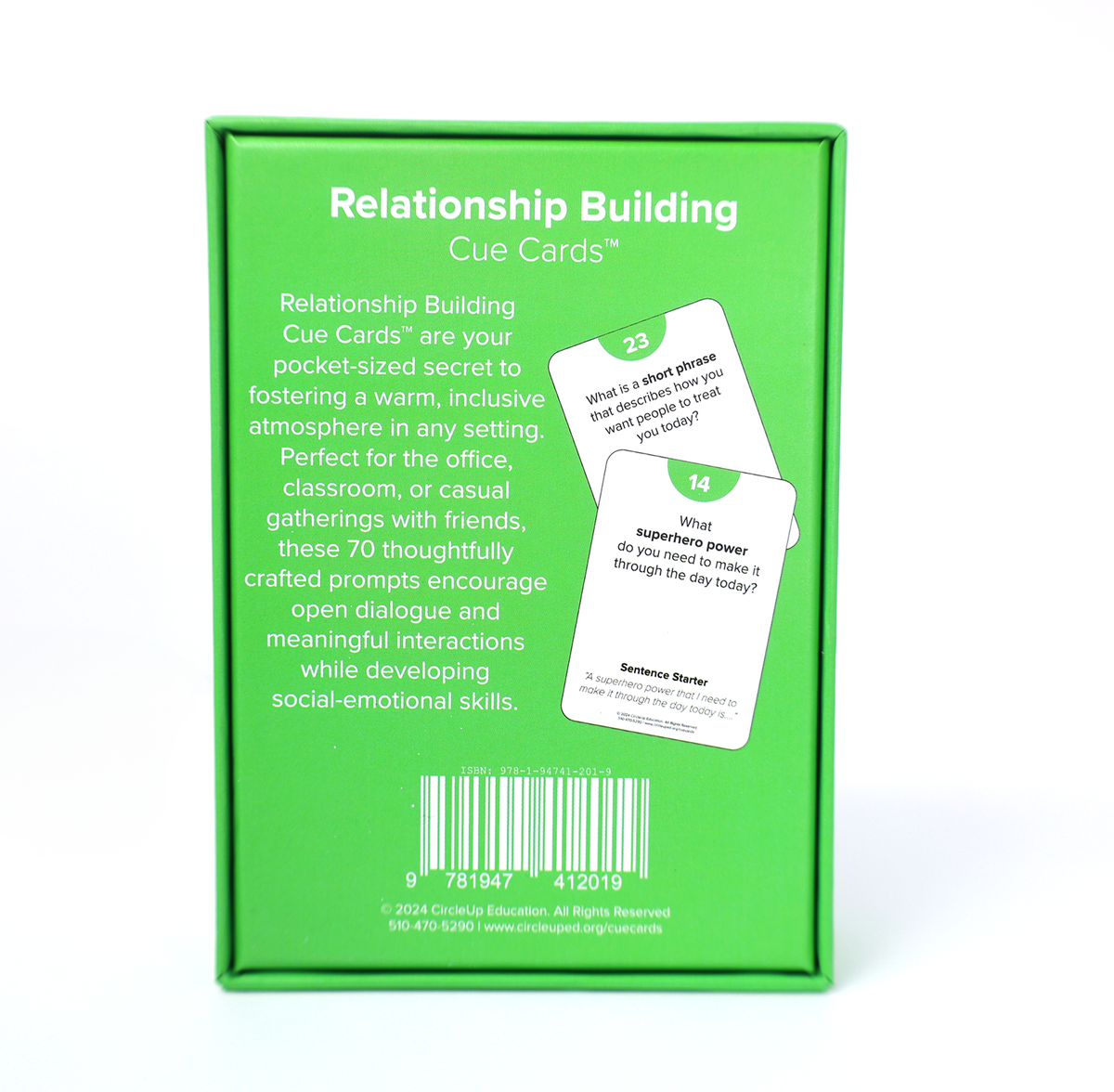
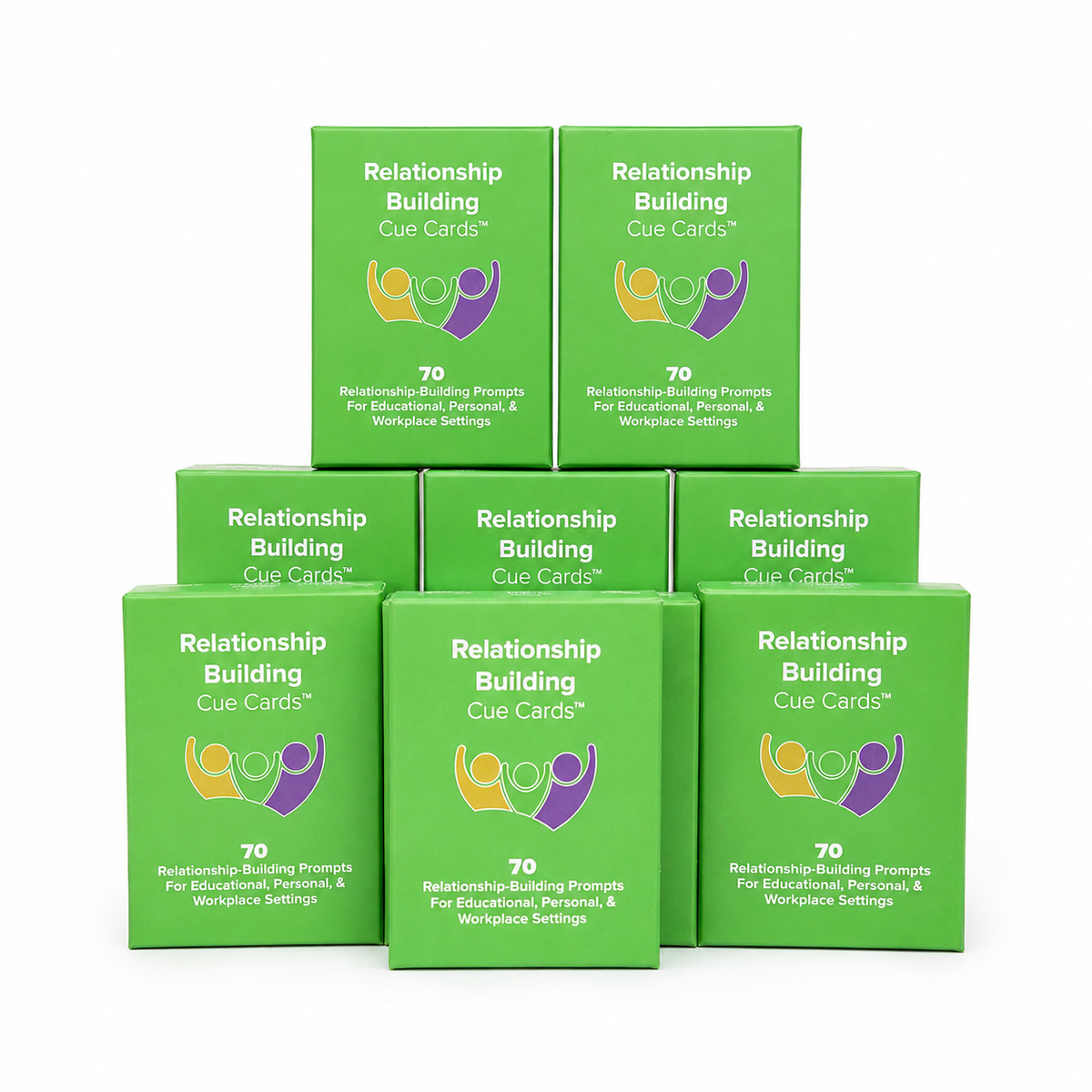
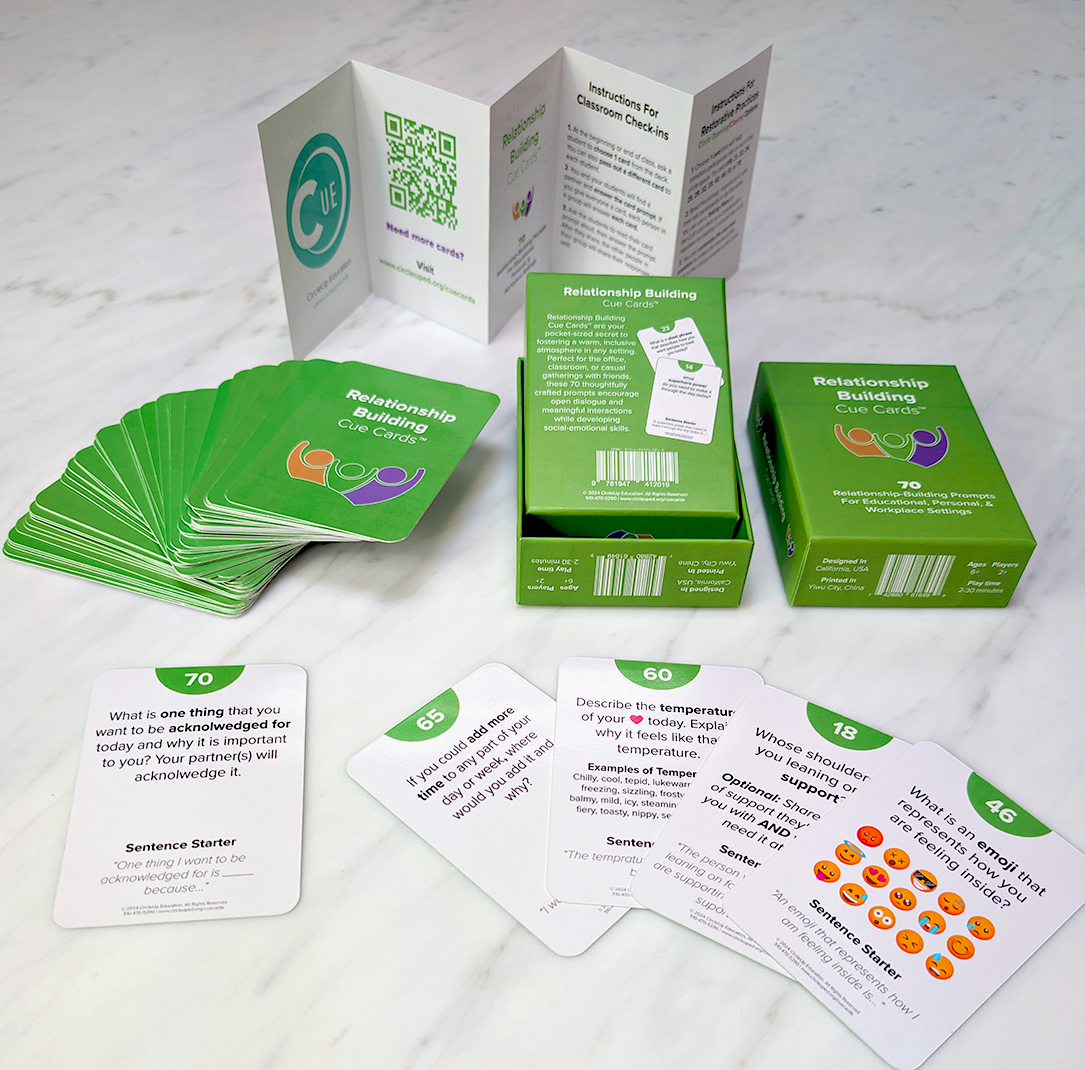
Explore our CircleCraft™ Relationship Circles Design Guide, facilitation starter kits, circle planning resources, restorative conversation cards, Relationship Building CUE Cards™, and other tools that support restorative practice.
The CircleCraft™ starter kits are especially useful for staff and teams who are beginning to design and facilitate relationship circles.

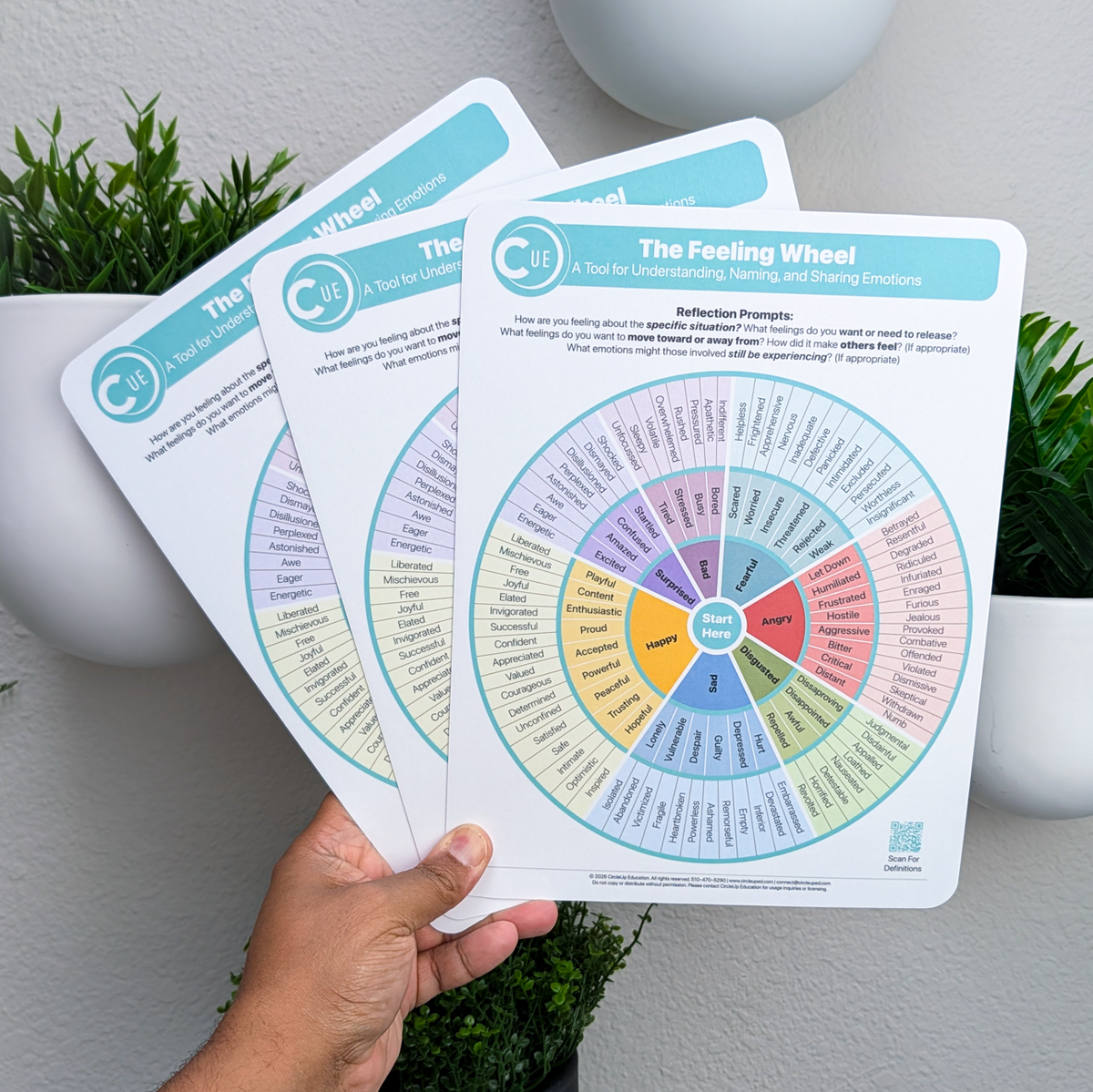
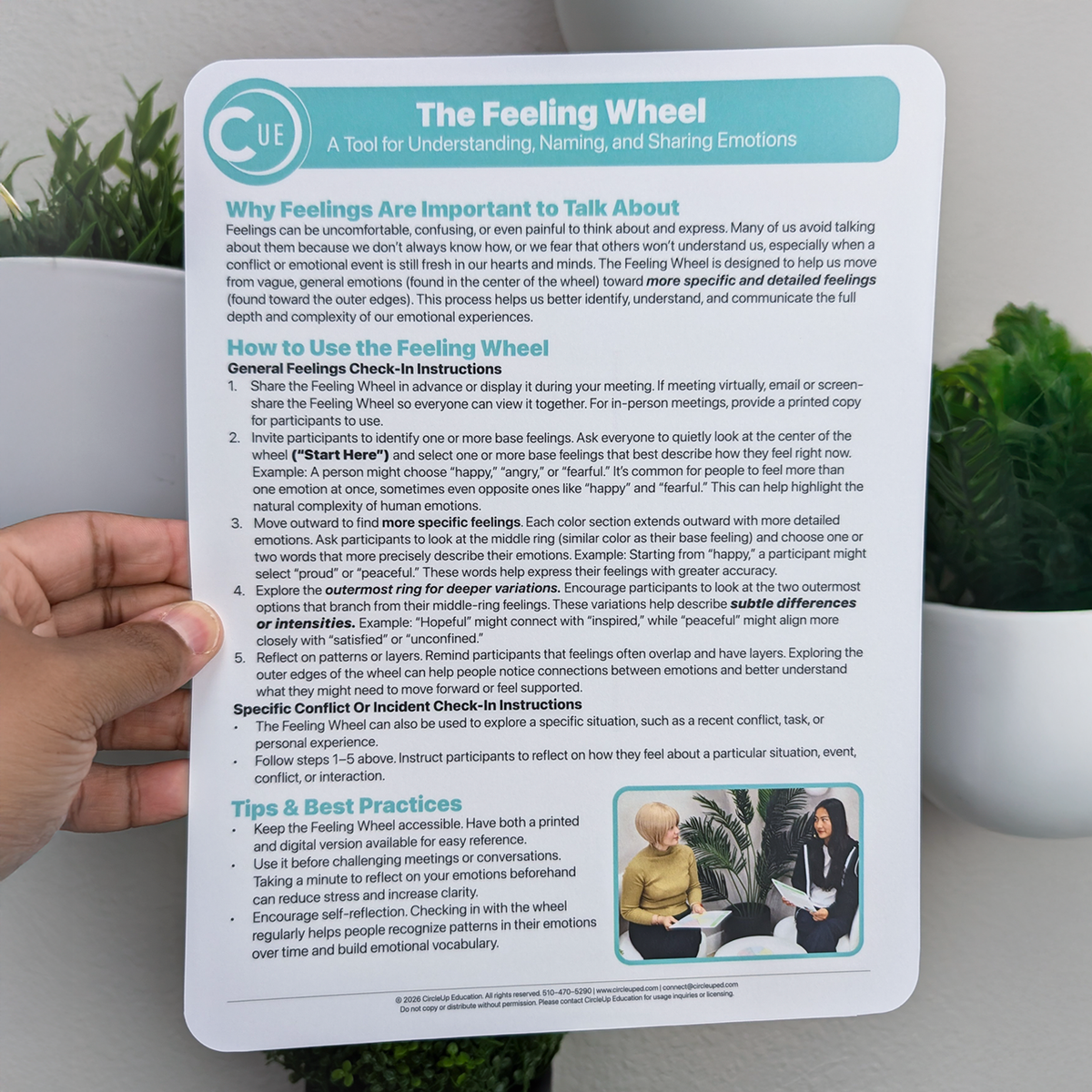
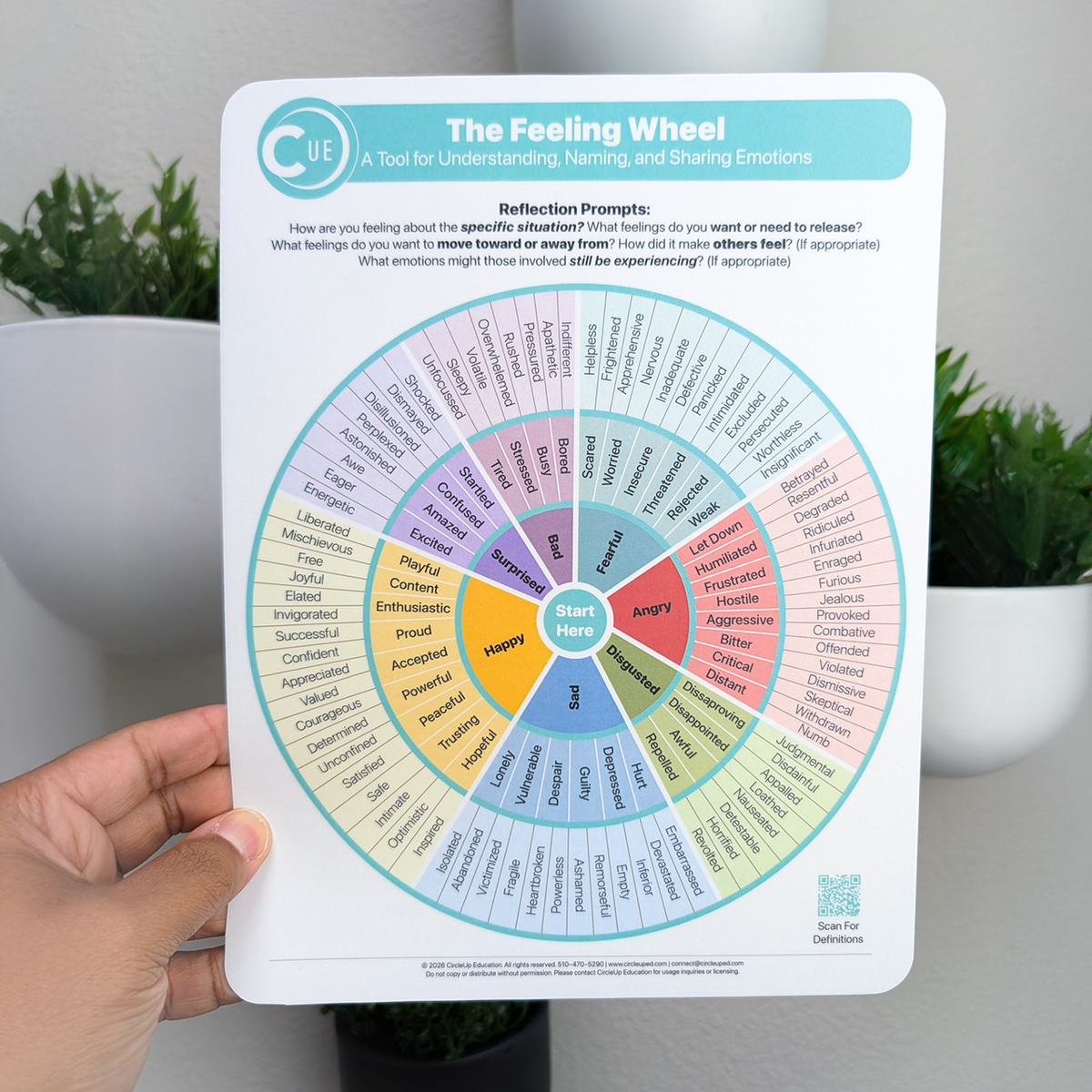
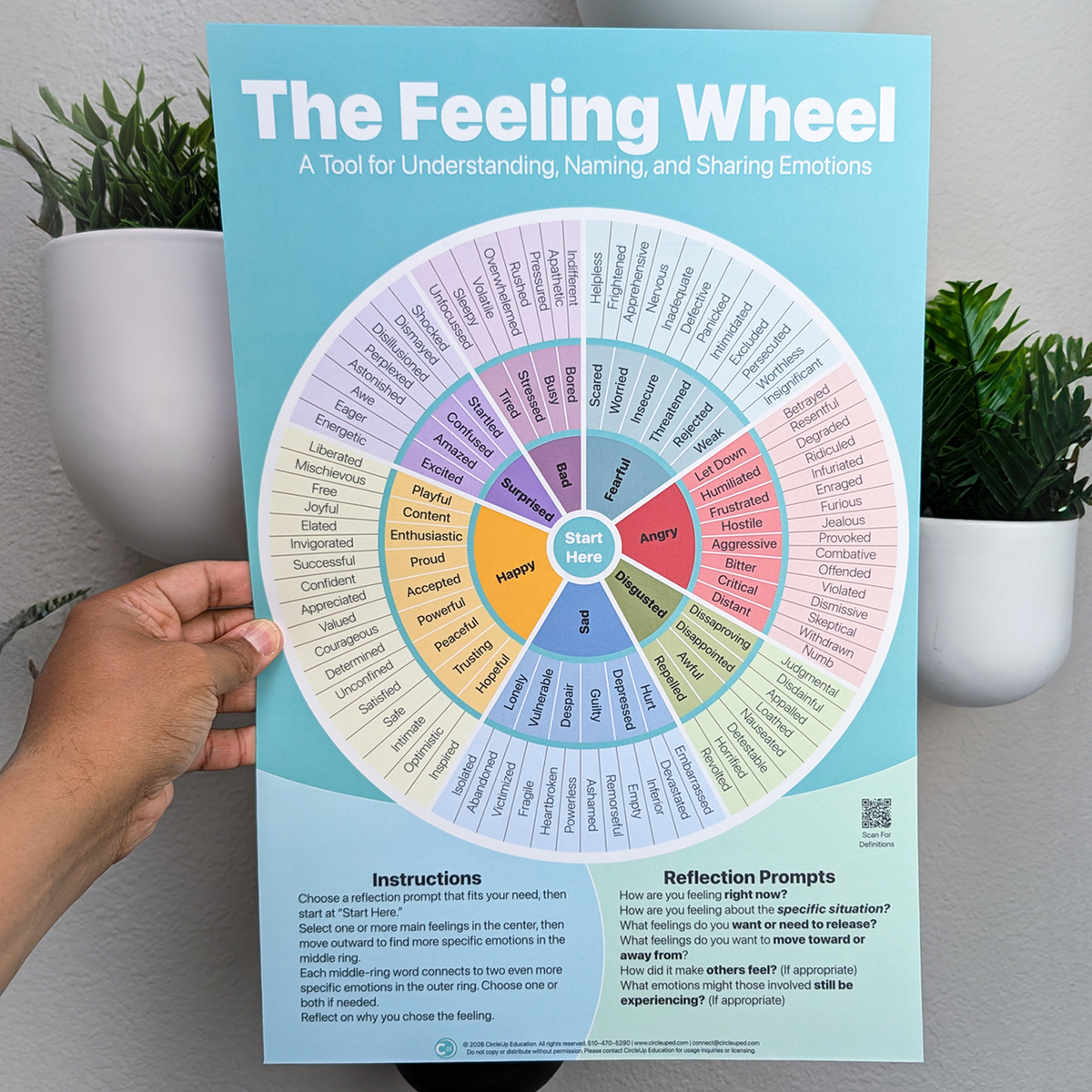
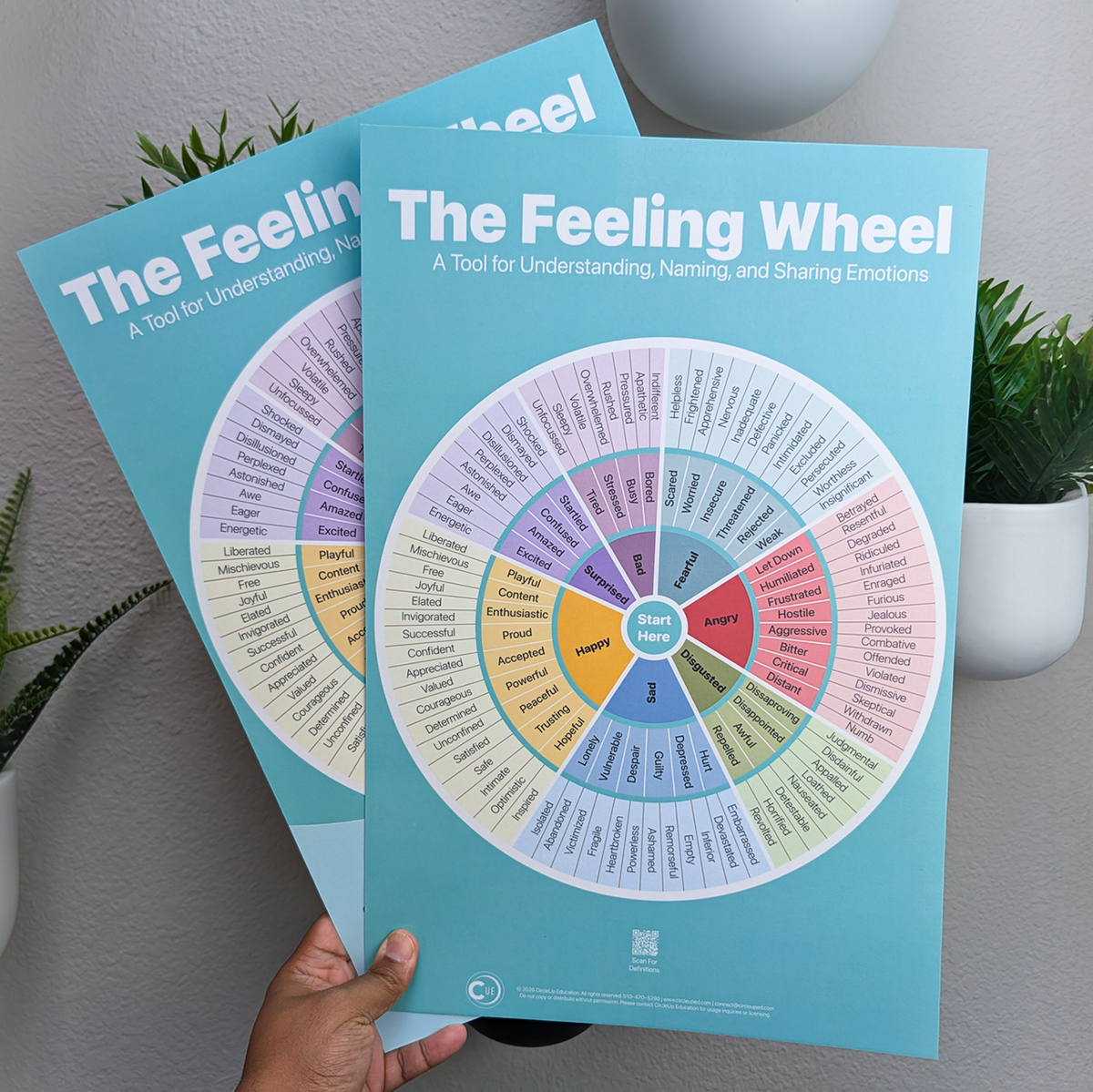
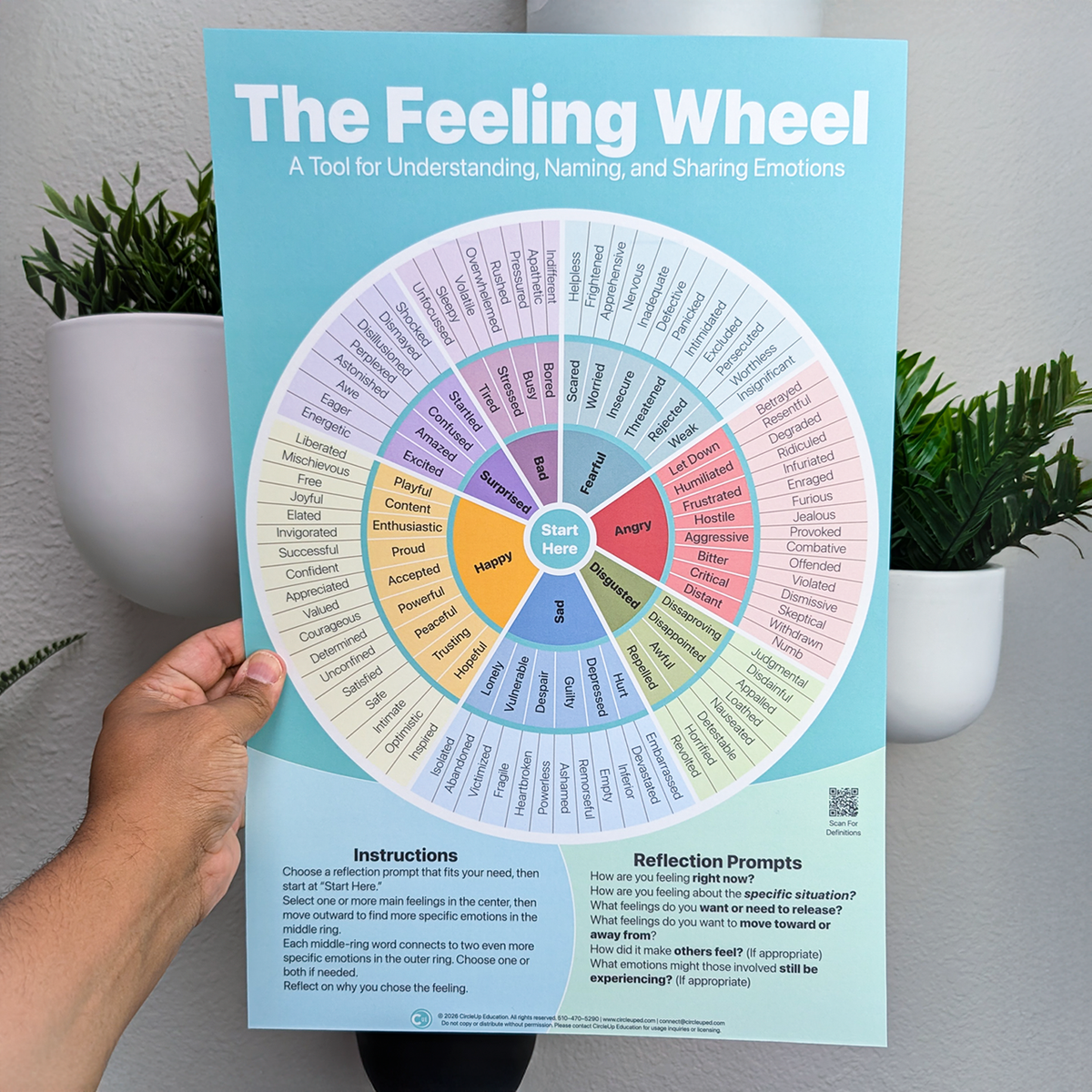
Feeling Wheel 3 Pack, 8.5 x 11 Soft-Touch Matte Laminated Cardstock
Considering restorative justice training for your school, district, workplace, or organization? Join a complimentary live online preview to experience our teaching approach firsthand.
Our training sampler includes selected activities, concepts, and instructional approaches from CueRestora® restorative justice programs, followed by a live question-and-answer session.
Ideal for administrators, HR and training leaders, managers, program coordinators, and others evaluating training options for their organization.
From introductory restorative justice learning to advanced practitioner development, CueRestora® can help your organization identify the training and implementation approach that fits your goals.
Schedule a complimentary 30-minute restorative justice training assessment to discuss your audience, objectives, training format, and potential next steps.
Live online or in-person sessions designed for your organization's participants.
Professional learning sequences for educators, staff, leadership teams, and implementation groups.
Combine foundational learning, restorative conversations, relationship circles, conflict circles, and related training.
Discuss group course access, institutional seats, and supported LMS or SCORM deployment for selected courses.
Ask about enrolling multiple participants, purchase orders, invoicing, and bulk training resources.
We'll discuss your goals and help identify appropriate next steps. There is no purchase required to schedule.
Book your restorative justice training consultation directly using the calendar below.
Find information about training formats, registration, certificates, certification, assessments, learning requirements, IACET CEUs, and bringing restorative justice training to your organization.
CueRestora® provides training in foundational restorative justice concepts, proactive relationship circles, responsive conflict circles, restorative conversations, restorative implementation, and complementary professional skills.
Our curriculum includes CircleCraft™ Relationship Circles, Conflict Circles, Solution Circles, CircleRestora® foundational trainings, OpenStep™ Restorative Conversations, BaseStep™, and other professional learning options. Courses may be offered publicly, privately for organizations, or through self-paced learning.
Yes. Public live training opportunities allow individuals to register for available sessions without enrolling an entire organization. Available dates, course details, enrollment options, and applicable prices are shown in the registration listings.
An individual course develops knowledge or skills in a specific restorative justice topic. Successful participation or completion earns the certificate identified for that particular course.
Practitioner Certification is a defined professional pathway with additional requirements such as assessments, knowledge checks, testing, practice, scenario-based application, and required design or skills submissions. Completing one individual course does not automatically satisfy all Practitioner Certification requirements.
Practitioner Certification pathways are offered in Relationship Circles, Conflict Circles, and Restorative Conversations, with an Advanced Practicum covering broader restorative skills and evaluated application.
Each pathway has defined training, assessment, practice, and submission requirements that must be completed before certification is awarded.
The certificate associated with a live training depends on the registration and completion requirements of the specific course. Some training options document participation, while additional assessments or successful course completion may qualify a learner for a different certificate.
Practitioner Certification requires completion of the designated certification pathway, which is separate from simply attending a public live training.
Requirements depend on the certificate and course. Certain participation certificates document attendance, while course completion or practitioner-level credentials may require quizzes, knowledge assessments, skills practice, design submissions, or other demonstrated work.
Practitioner Certification includes required assessed learning and applied work. Advanced Practicum participants must also complete designated real-world practice and evaluation requirements.
Assessment policies vary by course and certification pathway. Learners may have opportunities to review material or repeat an eligible assessment depending on the training requirements.
Some courses use an 80% passing benchmark, while other requirements may apply. Additional training, reassessment, or repeat enrollment may be necessary for certain unsuccessful certification or practicum assessments. The individual course rules govern.
Circle Up Education is an IACET Accredited Provider. Qualifying continuing education activities may award IACET CEUs when the specified requirements are met.
IACET provider accreditation is not the same as a Practitioner Certification, and it does not mean that every course automatically awards CEUs. The individual training listing identifies applicable units and completion requirements.
Live online training takes place at scheduled times with an instructor and may include facilitated activities, discussion, demonstrations, and practice.
Self-paced training allows learners to complete designated courses independently according to their schedules. Depending on the course, learners may engage with videos, interactive lessons, knowledge checks, assessments, and digital certificates.
Most live training experiences include the learning materials needed to participate. Certain trainings may recommend optional companion resources such as the CircleCraft™ Design Guide, planning tools, or facilitator kits.
Check the individual course description to confirm the specific materials included and whether additional tools are recommended or required.
Yes. Private training can be discussed for schools, districts, workplaces, universities, nonprofits, public agencies, and community organizations.
Training delivery may include live online or in-person learning, customized course sequences, practitioner development, and implementation support depending on your goals and program needs.
Organizational registration support is available for groups and institutions coordinating enrollment.
If your organization requires purchase orders, invoicing, checks, or assistance with registering multiple participants, contact our team before completing the purchase so we can discuss the available options.
Selected self-paced learning programs may be available through organization-wide seats or supported SCORM licensing arrangements.
Availability depends on the particular course, learning management system, implementation requirements, and institutional needs. Contact our team to discuss possible options.
Yes. Our free live online restorative justice training preview is designed to help potential learners and organizational decision-makers experience selected concepts, activities, and teaching methods before selecting a training.
The 90-minute experience includes approximately 60 minutes of sampler content and 30 minutes for live questions and answers.
Refund and transfer eligibility depends on the type of training, the registration date, and the applicable enrollment terms. Public live training and self-paced courses may have different requirements.
Review the applicable policies before purchasing. If you registered for an incorrect course or need to discuss transferring to another available training date, contact our team for assistance.
Official training programs have historically been delivered through Circle Up Education's internal training team rather than through an open volunteer or independently licensed trainer network.
If you need to verify whether a particular training or provider is officially authorized, contact our team directly.
No. Practitioner Certification documents completion of the designated training and competency requirements. It does not grant permission to reproduce, teach, distribute, license, or certify others in proprietary CueRestora® training content or certification programs.
Live online programs can serve learners in different locations, and private organizational training may be arranged beyond California depending on the program and logistical requirements.
Contact our team to discuss training location, delivery options, time zones, and organizational needs.
Register for an upcoming course, learn independently, strengthen your practice with professional tools, or bring CueRestora® restorative justice training to your organization.