
As a trained mediator and restorative justice practitioner, one of the things I've come to recognize over the years is how differently we can approach conflict, depending on the process we're using. When I think about the differences between traditional mediation and restorative mediation, I like to separate them into two parts: what happens before people come together and what happens during the actual conflict resolution meeting.
I think this distinction is important because we often put so much emphasis on the meeting itself. We want to know what questions to ask, how to facilitate the conversation, how to manage disagreements, and how to help people reach an agreement. And those things matter.
But what I've learned through our work at CircleUp® Education is that some of the most important conflict resolution work happens long before people ever sit across from one another. It happens during the incident assessment process. It happens when we're helping people understand what occurred, how it affected them, what they're feeling, and what they may need in order to move forward. And I think that's one of the biggest differences between the more traditional, settlement-focused mediation approaches I've experienced and the restorative practices we facilitate today.
Understanding traditional mediation
Traditional mediation can take many forms, and I want to acknowledge that from the beginning. There are different mediation models, including approaches that place a great deal of emphasis on relationships and emotions. What I'm referring to here is the more conventional, settlement-oriented approach to mediation, where the primary focus is helping individuals negotiate an agreement.
In these types of mediations, the assessment process is often focused on gathering information about the incident or dispute. That includes understanding what happened, who was involved, who may have caused the harm, how each person understands what occurred, and what damages, concerns, or disagreements need to be addressed. The mediator isn't necessarily determining who's legally at fault, but they are trying to understand the situation, the different perspectives, and what each person may need in order to reach some kind of resolution.
There's often a lot of back-and-forth communication, sometimes in individual meetings, where the mediator is gathering information and identifying possible areas of agreement. Maybe one person believes they're owed financial compensation. Maybe the conflict involves a workplace relationship where boundaries need to be established. Maybe someone wants a specific behavior to stop, or they want an agreement about how the two individuals will interact moving forward. The emphasis is on understanding what's needed to negotiate a resolution.
And there's nothing inherently wrong with that. Traditional mediation serves an important purpose, and I think there are circumstances where a settlement-focused process may be exactly what people need. But I've also seen limitations with this approach, particularly when the conflict involves strong emotions, damaged relationships, resentment, embarrassment, fear, or a sense of betrayal.
What sometimes happens is that we move toward the solution before we've really explored the impact of the conflict. We might know what someone wants, but we haven't necessarily helped them understand why they want it. And that distinction matters.
What happens when people finally come together?
The second part of mediation is the actual conflict resolution meeting. Sometimes the individuals meet together. Sometimes they remain separate, and the mediator communicates between them. When they do meet, there may be communication guidelines or procedural agreements, depending on the model being used. But in the settlement-oriented mediations I'm describing, the conversation often becomes focused on reaching an agreement. The questions then become practical: what each person will do, where they're willing to compromise, what boundaries need to be established, and which commitments everyone can accept.
Again, all important questions. But something can get lost in this process. The feelings and emotions surrounding what happened can become secondary to finding a solution.
I've seen situations where someone begins talking about how deeply something affected them, and the conversation quickly shifts back toward what can be done to resolve the issue. It's not necessarily because the mediator doesn't care about those feelings. Sometimes it's because the process, the available time, or the mediator's training is primarily oriented toward reaching a practical agreement.
The challenge is that people don't simply stop experiencing those emotions because an agreement has been reached. Someone may agree to new workplace boundaries and still feel humiliated by how they were treated. Someone may receive financial compensation and still feel unsafe. Someone may agree to move forward but continue experiencing anger, resentment, or distrust because they never felt that the other person understood what happened to them.
So, yes, we may have resolved the immediate dispute. But have we helped the individuals understand and address the underlying harm? Not always. And that's where restorative practices approach the process differently.
Restorative mediation starts long before the circle
One of the things we emphasize heavily at CueRestora® is what we call the CircleCraft Pre-circle Assessment practice. This is the work that happens before a restorative mediation, restorative conference, or conflict circle.

And I really cannot emphasize enough how important this part of the process is. During an incident assessment, we're trying to understand what happened, who was affected, who may have caused harm, and what responsibilities may need to be acknowledged. Sometimes one person clearly caused harm to another. Sometimes multiple people contributed to the conflict. Sometimes the circumstances are more complicated, and we have to take time to understand the different incidents, experiences, and relationships involved. We also have to be careful not to assume that everyone contributed equally. Particularly when there are significant power differences, intimidation, harassment, or other safety concerns, that assumption can create additional harm.
But beyond understanding the incident, there's something else we're doing during these assessments. We're helping people sit with their feelings and emotions about what happened. We're helping them reflect. We might ask how the experience made them feel, what was happening for them emotionally when the incident occurred, and how they're feeling about the situation now. We might explore how they believe their actions affected the other person, what emotions come up when they imagine having a conversation with that person, and what those feelings tell them about what they may need.
These are not simply questions we're asking to gather information for the facilitator. They're questions that can help individuals better understand their own experiences. And that understanding can change the entire direction of the conflict resolution process.
Feelings help people understand what they actually need
I think one of the most overlooked pieces of conflict resolution is the relationship between feelings and needs. People will often tell us what they want. They might say they want an apology. They want someone removed from their team. They want the other person to admit they were wrong. They want compensation. They want the relationship to end. And sometimes those requests are entirely appropriate.
But sometimes, when we spend more time exploring the feelings connected to those requests, we discover something deeper. Maybe someone wants the other person removed from their team because they feel unsafe. Maybe they're asking for an apology because they felt humiliated in front of their colleagues. Maybe they're demanding an admission of wrongdoing because they feel that no one has acknowledged their experience. Or maybe someone who appears angry is actually experiencing fear, sadness, disappointment, or a profound sense of betrayal.
When people can identify those emotions, they often have a better opportunity to understand what they need. And when they understand what they need, they can participate more meaningfully in deciding what needs to happen next. This doesn't mean every feeling automatically tells us what the right solution is. Feelings are important information, but we still have to consider the circumstances, other people's rights, safety, and what's realistically possible. What it does mean is that we're no longer asking people to negotiate solutions without first helping them understand the experiences driving those needs. That's a significant difference.
I sometimes think we rush through conflict resolution because we're uncomfortable with emotions. We want people to calm down. We want to reduce the tension. We want to find the solution and move forward. But rushing someone past what they're feeling doesn't necessarily help them move through it. Sometimes we need to give people the opportunity to recognize what's happening internally before asking them to decide what should happen externally. And that's a skill practitioners have to develop.
Processing emotions requires more than asking restorative questions
Something we talk about extensively in our restorative justice trainings is the difference between knowing the structure of a process and having the facilitation skills to actually hold the space. A practitioner might know every restorative question. They may have memorized the steps of a restorative circle, understand how to establish agreements, and know how to guide participants toward an outcome. Those are what I would consider some of the structural or hard skills of the practice. But there's another layer.
Someone might begin crying during an assessment, become visibly angry, reveal something deeply personal or painful, or say something that challenges your own values or beliefs. In those moments, do you immediately try to fix the situation, redirect the conversation because you're uncomfortable, or move someone toward forgiveness or an apology before they're ready? Or can you remain present, listen without judgment, acknowledge the emotion, and help the person explore what's happening for them? This is where the softer, more relational skills become incredibly important.
At CueRestora®, we train facilitators to sit with difficult emotions rather than automatically trying to eliminate them. We teach practitioners how to listen, paraphrase, reflect feelings, recognize when someone needs additional time, and create opportunities for people to process their experiences without being rushed toward a particular outcome. That doesn't mean we're acting as therapists or providing clinical treatment. Restorative practitioners need to recognize the boundaries of their role and when someone's needs require specialized support.
But it does mean that we need to become more skilled at navigating emotional conversations. We can't expect people to arrive at a restorative meeting without anger, sadness, grief, frustration, or fear. Those feelings are often part of why the meeting is necessary in the first place.
The restorative conference becomes a different kind of conversation
When we've invested the appropriate time in incident assessments and preparation, the restorative meeting itself can look very different. Before bringing people together, we want to understand whether they're ready and willing to participate. We're considering whether they're prepared to share their perspective and hear another person's experience, whether a person who caused harm is prepared to acknowledge responsibility where appropriate, and whether everyone can participate without intimidation or pressure. We also need to know whether a shared meeting will be safe, voluntary, and appropriate.
If the answer is no, more preparation may be needed, or we may need to consider a different process entirely. We don't believe that simply bringing everyone into the same room automatically makes something restorative. When a restorative mediation or conference does move forward, we establish agreements about how people will communicate and participate. We want individuals to understand what they can expect from the conversation, how they will be heard, and how the facilitator will support the process.

We then create space for people to talk about what happened. Not just what the mediator has summarized, but what the individuals themselves experienced. From there, we explore the impact. How were people affected? How did they feel? What changed for them? How did their actions affect others? This part is incredibly important because it creates opportunities for people to hear perspectives that they may not have previously understood.
Someone may have spent weeks thinking about what another person did without ever understanding how that person experienced the situation. Someone who caused harm may have been focused entirely on defending their intentions without really considering the impact of their actions. The restorative process creates an opportunity to address that. And once people have had the opportunity to share their experiences and talk about the impact, we can begin exploring what they need.
We ask what would help make things right, what responsibilities need to be taken, and what's actually possible. We explore what boundaries, changes, commitments, or actions may be necessary, and whether the people being asked to make those commitments are actually able and willing to fulfill them. This is where we move into the solution-building and agreement process.
But notice what happened before we got there. We didn't begin with the agreement. We began with the people.
Why preparation can make the actual meeting more effective
Something we've noticed through our own restorative practice is that when we spend more time preparing individuals, the eventual resolution meetings are often less confrontational and more productive. People may arrive with less of a need to argue or defend every detail of the incident. They've already had opportunities to reflect on what happened, recognize their emotions, explore their needs, and consider what they want the conversation to accomplish. They have a clearer understanding of what they're walking into.
That doesn't mean there won't be difficult moments. Restorative conversations can still be emotional, uncomfortable, and challenging. But we've found that the more intentional our preparation is, the better positioned people often are to listen, participate, and work toward meaningful outcomes.
Sometimes the joint meeting itself can even move more quickly because much of the emotional processing and preparation has already happened. Of course, that doesn't mean the entire restorative process is always faster. In many cases, we're investing considerably more time before the meeting. And I think that's time well spent.
Because the goal isn't simply to get people into a room, complete an agreement, and close the case. The goal is to create the conditions for a meaningful conversation that can support accountability, understanding, and lasting change.
Why we moved away from traditional mediation
At CircleUp® Education, we've evolved our conflict resolution practices over the years. Today, we focus on restorative approaches rather than offering traditional settlement-focused mediation as a standalone service. We generally work with two types of facilitated processes.
One is what we call restorative mediation, where we're supporting individuals through a conflict using restorative preparation, emotional processing, dialogue, and needs-based resolution. One example of this approach is our CircleCraft™ Conflict Circles, which brings together restorative justice, mediation, and conflict transformation principles to help individuals navigate difficult incidents and work toward meaningful, needs-based outcomes. The other involves more structured restorative justice circle practices, including restorative conferences and what we call Solution Circles.
Our Solution Circle is our approach to a restorative harm circle, designed to help individuals discuss what happened, explore the impact, identify responsibilities, and work toward meaningful solutions. We use the term Solution Circle because we want to emphasize that responding to harm involves more than discussing the incident. It also involves understanding what needs to happen next. That doesn't mean we're bypassing accountability or minimizing what occurred. In fact, accountability is central to the process.
We've simply found that these restorative approaches are better aligned with the type of outcomes we want to create. In our experience, thoughtful preparation and emotionally skilled facilitation have helped produce less escalation, more opportunities for empathy and compassion, and more meaningful participation. Not because restorative justice is somehow guaranteed to be better in every situation. And certainly not because every restorative practice is facilitated equally well. But because of how we've learned to prepare people, hold difficult conversations, and create space for the emotional experiences connected to conflict.
For organizations that need outside support navigating difficult workplace or organizational conflicts, our Conflict Restora™ Direct services provide facilitated support from the initial assessment through the conflict resolution process, including preparation, dialogue, and agreements.
Why we created our Feeling Wheels, Emoji Charts, and conversation tools
People sometimes ask us why we have so many tools focused on feelings and emotions. Why do we create Feeling Wheels and Emoji Emotions Charts, and why do we place so much emphasis on emotional check-ins and relationship-building activities?
And I think it's important to understand that these tools weren't developed simply because we wanted to create products to sell. We developed them because we needed them in our own work. We needed better ways to help people communicate what they were experiencing.
During incident assessments, we often work with individuals who know they're upset but struggle to explain what they're actually feeling. Someone might say, "I'm angry." But anger can represent so many different experiences. Maybe they're frustrated. Maybe they're feeling rejected, disrespected, overwhelmed, powerless, or afraid.
And sometimes, when we help people explore those feelings more specifically, something changes. The person begins to understand their own experience differently. They may find words for something they've been struggling to communicate. They may recognize that what they thought was anger was actually disappointment, embarrassment, or sadness.
That's why we created tools such as the CircleUp® Feeling Wheel. We wanted to give people a way to move beyond broad descriptions of emotions and explore what they were feeling with more clarity. Our Emoji Emotions Charts serve a similar purpose, providing visual ways for people to identify and communicate feelings, particularly when finding the right words may be difficult. And our Relationship Building CUE Cards™ help create opportunities for reflection, dialogue, connection, and greater understanding between people. These tools are not meant to replace skilled facilitation. They support it.


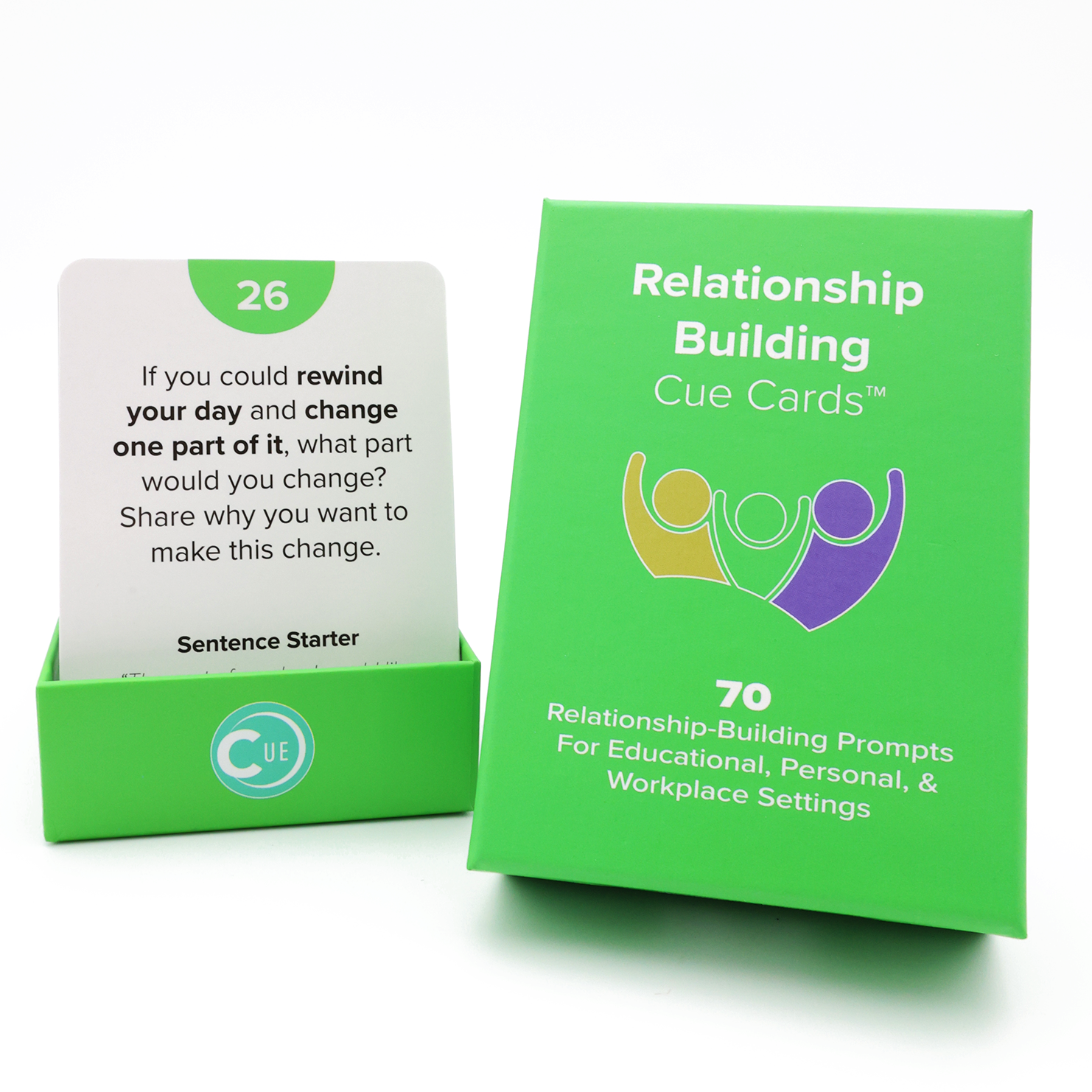
They give practitioners and participants something practical to work with when conversations become difficult, when emotional vocabulary is limited, or when people need a starting point for reflection. And we don't just use them during conflict resolution. We also use these kinds of tools in restorative justice relationship circles, team-building activities, workplace conversations, and community dialogue. Because sometimes we come into those spaces carrying emotions from experiences that have nothing to do with the people in the room.
We may be frustrated about something that happened earlier in the day. We may be experiencing stress, disappointment, anxiety, or unresolved tension. And if we're not aware of those feelings, they can influence how we listen, how we respond, how we interpret other people's actions, and how we participate in the conversation.
Part of the purpose of an emotional check-in is to help people become present to what they're experiencing. Not simply to name an emotion and move on. But to understand what they're feeling and consider what they want to do with that information. Because the feelings we carry can shape our relationships and our interactions with others, whether we're aware of them or not.
There's also something else I think is incredibly important here, and that's the idea that we shouldn't wait until people are experiencing conflict before we begin teaching them how to talk about their feelings and emotions. We should be practicing these skills when things are going well, too. Think about it for a moment.
If you have a team of people who have never really had the opportunity to talk about how they're feeling, who aren't used to sharing their emotions, and who don't have much experience listening to one another in that way, imagine how difficult it can be to suddenly ask them to do all of those things when they're experiencing a serious conflict. Now we're asking them to identify their emotions, communicate their needs, listen to someone else's feelings, and potentially take accountability for something they did. And we're asking them to do this when emotions are already heightened. That's a lot to ask of people who haven't had opportunities to develop those skills.
This is one of the reasons we place so much emphasis on relationship-building circles as part of restorative justice. Restorative justice isn't only about responding to harm after something has happened. It's also about building relationships, establishing trust, strengthening communication, and helping people become more comfortable engaging in meaningful conversations before conflict arises.

And that's where tools such as our CircleCraft™ Relationship Circles Design Guide can become especially valuable. We developed this guide to help practitioners design purposeful relationship-building circles for their classrooms, workplaces, teams, and communities. Rather than simply selecting a prewritten circle and hoping it works for everyone, the guide walks practitioners through a structured design process so they can create circles around the actual needs, relationships, and circumstances of the people who will be participating. You can use it to design community agreement circles, values exploration circles, team-building circles, and discussion circles. And you can intentionally incorporate activities that help people identify feelings, communicate emotions, discuss their needs, listen to different perspectives, and learn how to be present with one another.
Imagine a team that begins incorporating regular relationship circles into its meetings. Maybe they begin with a simple emotional check-in using a Feeling Wheel or an Emoji Emotions Chart. Maybe they use a few Relationship Building CUE Cards™ to help people reflect on their experiences, learn something new about one another, or share how they're showing up that day.
Over time, those experiences can help normalize conversations about feelings. People become more familiar with the language of emotions. They get opportunities to practice listening without immediately trying to fix someone else's experience. They learn that it's okay to share what they're feeling and that other people may experience the same situation very differently. And they get to practice those skills in spaces where the emotional stakes may be much lower than they would be during an actual conflict.
That's the proactive side of restorative justice that I think is so important. We're not just trying to help people resolve conflict when it happens. We're helping them develop the relationships and communication skills that can make conflict easier to navigate when it inevitably occurs.
For practitioners who want another resource for designing restorative circles, we also have our CircleRestora™ Restorative Circles Design Guide. This guide helps practitioners think through how to structure restorative circles intentionally, including the activities, questions, agreements, reflections, and other components that make a circle meaningful for the people participating. It can support the design of both proactive relationship-building experiences and responsive restorative circles where people are working through issues, repairing relationships, or responding to harm.
What I appreciate about having these design resources is that they give practitioners a way to be intentional. Instead of just asking people how they feel because it's part of a circle routine, we can think more carefully about why we're asking, how we're creating space for those emotions, and what we want participants to gain from the experience. And I think that makes a difference. Because when we create regular opportunities for people to connect with their emotions, communicate their needs, and understand one another, we're also helping establish a stronger foundation for the more difficult conversations that may come later.
What I recommend to mediators and restorative justice practitioners
If you're a traditionally trained mediator who hasn't had much exposure to restorative justice, or you're already facilitating restorative practices and finding that your conflict resolution meetings are difficult, one of the first things I would recommend is to look more closely at your incident assessment process. I really believe this is one of the most valuable areas where practitioners can invest their time and professional development. We spend a lot of time teaching people how to facilitate meetings. But we don't always spend enough time teaching them how to assess conflict, understand emotional impact, identify the different issues involved, and determine what kind of process is actually appropriate.
Sometimes the conflict people bring to us isn't just one conflict. There may be several separate incidents. There may be underlying relationship issues, historical tensions, different expectations, or harms that need to be addressed individually. A skilled practitioner needs to be able to recognize those differences and determine what should be addressed, what requires additional preparation, and whether the people involved are ready for the next step. And sometimes the best decision is not to facilitate a joint meeting at all.
If there's a limited training budget, I would encourage organizations and practitioners to seriously consider investing in stronger incident assessment and pre-conference preparation skills. That means learning how to ask better questions, recognize the emotional needs behind someone's responses, and listen without immediately jumping toward a solution. It also means learning how to assess readiness, accountability, and safety, and how to recognize when a conflict may require a different kind of intervention.
I'm not suggesting that every assessment needs to be unnecessarily long. What matters is that the assessment is thorough enough, intentional enough, and responsive enough to prepare people for a meaningful process. The more skilled you become at that part of the work, the more effective your eventual meetings can become.
For practitioners who want to strengthen this particular part of their practice, our CircleCraft™ Conflict Circles: Pre-Circle Assessment & Preparation Training focuses specifically on how to assess incidents, prepare individuals, explore emotional impact, identify readiness, and develop the skills needed for effective pre-circle conversations. And if you're looking to strengthen your practice more broadly, I would also encourage you to begin incorporating relationship-building circles into your organization or community before conflict arises. Our CircleCraft™ Relationship Circles Design Guide, along with its free companion course, can help you begin designing those experiences and integrating emotional check-ins, relationship-building activities, and meaningful dialogue into the regular ways your team comes together.

Practitioners also have to understand their own feelings
There's another part of this work that I don't think we talk about nearly enough. And that's the emotional experience of the practitioner. If we're going to ask people to explore their feelings, reflect on their actions, and sit with difficult experiences, we have to be willing to do some of that work ourselves. Because facilitators are human. We have our own histories, experiences, relationships, values, and unresolved emotions. And sometimes, when we're facilitating a difficult conversation, someone will say or do something that brings up an emotional response in us.
Maybe their behavior reminds us of something that happened in our own lives. Maybe we feel protective of one of the participants. Maybe we feel frustrated, uncomfortable, or personally offended by something someone says. The problem isn't necessarily that we have those reactions. The problem is when we're unaware of them and allow them to influence how we facilitate.
We might interrupt someone more frequently. We might rush one participant through their feelings while giving another person more time. We might unintentionally communicate disapproval through our facial expressions, tone, or body language. We might begin trying to direct the conversation toward the outcome we personally believe should happen. And that can undermine the process.
That's why I think emotional self-awareness is such an important part of restorative facilitation. We have to learn to recognize our own reactions, manage them appropriately, and seek supervision or additional support when something is interfering with our ability to facilitate fairly.
And we need to check our bias
The other thing I would strongly encourage practitioners to do is examine their biases before they begin facilitating. This is a step that can be easy to overlook. We may have biases connected to gender, race, age, culture, identity, political beliefs, communication styles, or someone's role within an organization. Sometimes our biases are connected to personal experiences.
Maybe something about a participant reminds us of someone we've had a difficult relationship with. Maybe we feel more sympathetic toward one person's circumstances. Maybe we've already formed an opinion about what happened based on the information we received before the assessment.
These things can influence us even when we believe we're being neutral. And people can often sense those differences in our interactions. They may notice who receives more attention, whose emotions are validated, what assumptions we're making, or whether we appear more comfortable with one person than another.
Checking our bias doesn't mean pretending we don't have perspectives or emotional responses. It means being intentional about recognizing them so they don't determine how we treat the people we're there to support. For me, that's part of what it means to become a more skilled restorative practitioner. It's not just about learning a process. It's about developing the capacity to facilitate that process with empathy, reflection, accountability, and awareness of our own limitations.
The goal isn't simply to finish the conflict
I think one of the biggest lessons we've learned through our work is that conflict resolution isn't always about how quickly we can get people to an agreement. It's about whether the process actually addresses what people experienced and what they need moving forward. Sometimes that's a practical agreement. Sometimes it's greater understanding. Sometimes it's acknowledging harm, establishing boundaries, taking responsibility, or recognizing that a relationship needs to change. And sometimes it's helping people understand their own feelings well enough to make more informed decisions about what happens next.
There's a place for traditional mediation, and I don't believe we have to position one approach as inherently better than another. But through our work at CircleUp® Education and CueRestora®, we've found that restorative approaches give us opportunities to address parts of conflict that can otherwise be overlooked. And one of the most important parts of that work is making space for feelings and emotions.
That means not rushing past those feelings, not judging them, and not treating them as obstacles that need to be removed before the real work can begin. It means recognizing that understanding those emotions is often part of the real work.
Because when people better understand what they're feeling, they can begin to understand what they need. And when they're better prepared to communicate those needs, take responsibility where appropriate, and hear one another's experiences, we create more opportunities for meaningful resolution. For me, that's what makes the preparation process so powerful. And it's why we continue to place so much emphasis on incident assessment, emotional processing, and the facilitation skills needed to hold these conversations well.
If you're a mediator or restorative justice practitioner interested in developing these skills, CircleUp® Education offers CircleCraft™ Conflict Circles: Pre-Circle Assessment & Preparation Training, focused on assessing incidents, preparing participants, exploring emotional impact, and building readiness for restorative conflict resolution.
Organizations seeking professional facilitation can also explore our Conflict Restora™ Direct services, CircleCraft Pre-circle Assessment practice, and CircleCraft™ Conflict Circles.
For teams looking to build relationships and strengthen emotional communication before conflict occurs, explore the CircleCraft™ Relationship Circles Design Guide and the CircleRestora™ Restorative Circles Design Guide.
You can also explore the CueRestora® educational tools collection, including Feeling Wheels, Emoji Emotions Charts, and Relationship Building CUE Cards™, designed to support this work in real-world settings.
Tyrone Botelho
Co-Founder, CircleUp® Education & CueRestora®
Share: